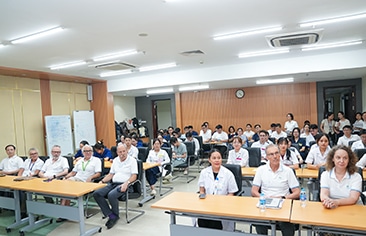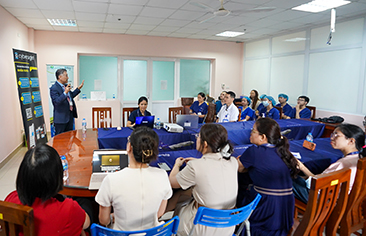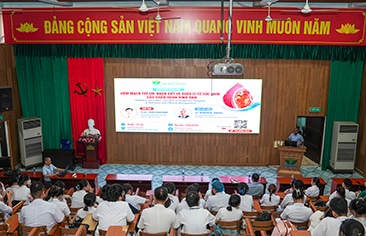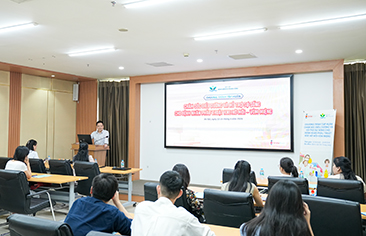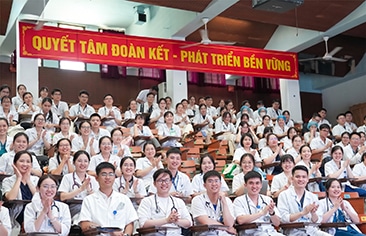
On October 1, 2026, the Vietnam National Children’s Hospital held a scientific meeting titled “Applying Evidence-Based Medicine and Critical Thinking in Clinical Practice in the Era of Artificial Intelligence.” The event brought together many doctors, postgraduate students from the hospital, and healthcare professionals from across the country.
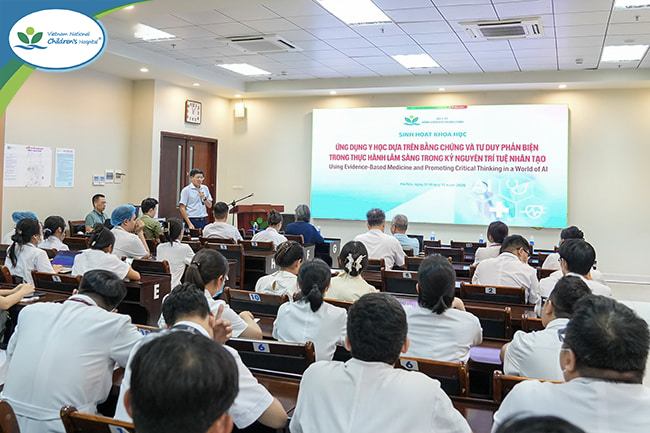
Dr. Phan Huu Phuc, MD, PhD, Vice Director of Vietnam National Children’s Hospital , led the scientific meeting.
The meeting featured Associate Professor Catriona Caldwell from the Department of Pediatrics and Child Health at Westmead Children’s Hospital, University of Sydney, Australia. She presented on two main topics: “Applying Evidence-Based Medicine and Research to Improve Clinical Care Quality” and “Developing Critical Thinking Skills in the Era of Artificial Intelligence.”
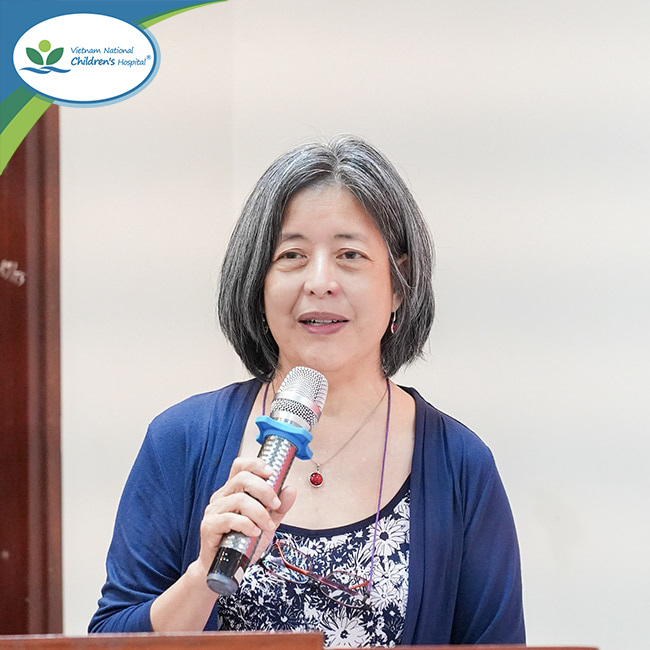
Assoc. Prof. Catriona Caldwell shared practical knowledge and experience while expressing her hope to continue working together in the future.
Drawing on her experience as a clinician and researcher, Assoc. Prof. Caldwell shared basic skills for searching, evaluating, and using medical information. She explained how to identify clinical issues, frame structured questions, pick search terms, and find relevant evidence. She also highlighted why it is vital to check if information is reliable before using it with real patients.
Through practical medical cases, participants learned how to turn daily problems into clear, structured questions, set up search strategies, and select appropriate information. Assoc. Prof. Caldwell also shared methods to review research papers, check study methods, spot potential bias, and decide if results apply to specific patient cases.
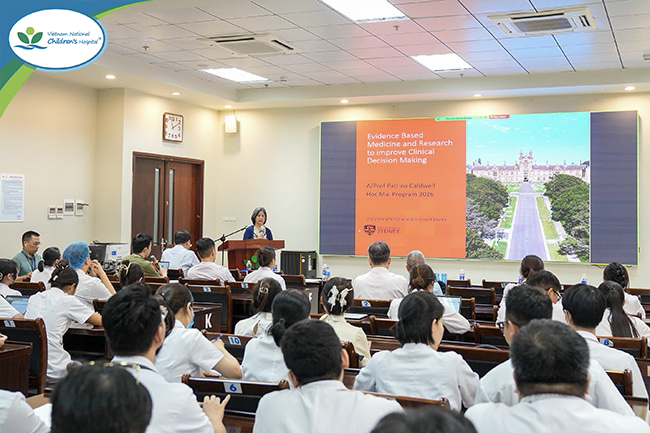
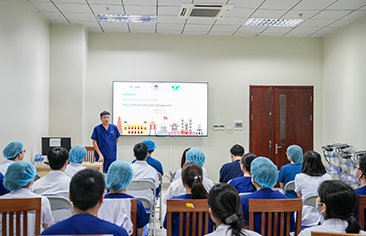
Assoc. Prof. Catriona Caldwell guiding how to search, check, and review medical research evidence.
Today, artificial intelligence (AI) is widely used to look up, summarize, and access medical knowledge. This makes critical thinking even more essential for healthcare staff. During the session, Assoc. Prof. Caldwell explained how to make clinical decisions when AI is changing how we access information. She highlighted the value of critical thinking, how to build this skill at work, and how over-relying on AI might harm a doctor’s independent judgment.
Speaking at the event, Dr. Phan Huu Phuc emphasized the importance of evidence-based medicine in modern clinical care. As precision medicine, personalized care, and AI continue to grow, clinicians need a clear, systematic way to check scientific information and apply it properly to each patient.
The event gave healthcare staff practical ways to make better use of medical knowledge in the digital age. Combining scientific evidence, critical thinking, and technology will help raise the quality of clinical practice, working toward safer, better, and more complete healthcare for children.