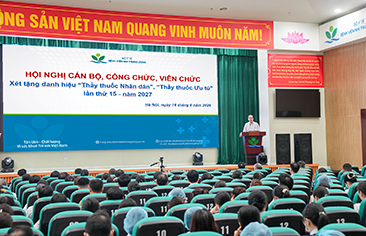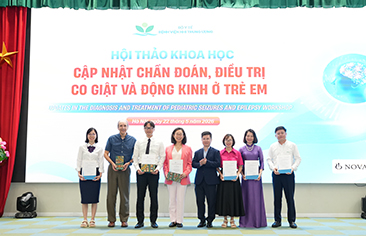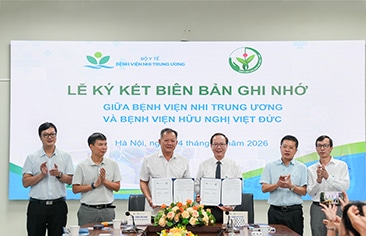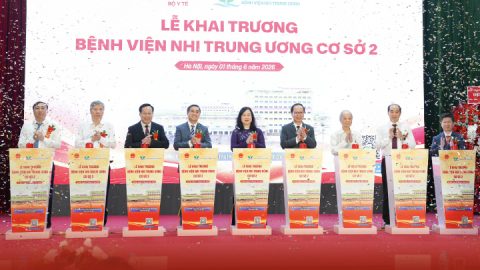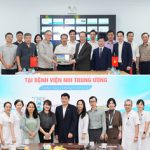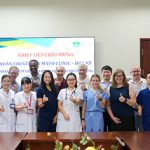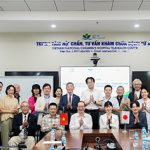
On September 23, 2026, Vietnam National Children’s Hospital (VNCH) hosted working visits by delegations from Children’s Hospital 1, Ho Chi Minh City, as well as Tongji Architectural Design (Group) Co., Ltd. (TJAD), China, and the Vietnam University of Traditional Medicine. The working sessions focused on professional exchange, practical experience sharing, and stronger institutional connections in the development of advanced medical techniques and the operation of modern healthcare facilities.
VNCH Shares Experience in Planning and Operating Campus 2 with Chinese Architectural Experts and the Vietnam University of Traditional Medicine
On the afternoon of September 23, VNCH welcomed a delegation from Tongji Architectural Design (Group) Co., Ltd. and the board of directors of the Vietnam University of Traditional Medicine to Campus 2. The meeting focused on practical experience in hospital spatial planning, functional layout, infrastructure development, investment, construction management, and the operation of modern healthcare facilities.
The session was chaired by Prof. Tran Minh Dien, MD, PhD, Director of Vietnam National Children’s Hospital; Assoc. Prof. Nguyen Quoc Huy, MD, PhD, Director of the Vietnam University of Traditional Medicine; and Jiang Limin, Chief Architect of Tongji Architectural Design (Group) Co., Ltd. and President of No.4 Architectural Design Institute.
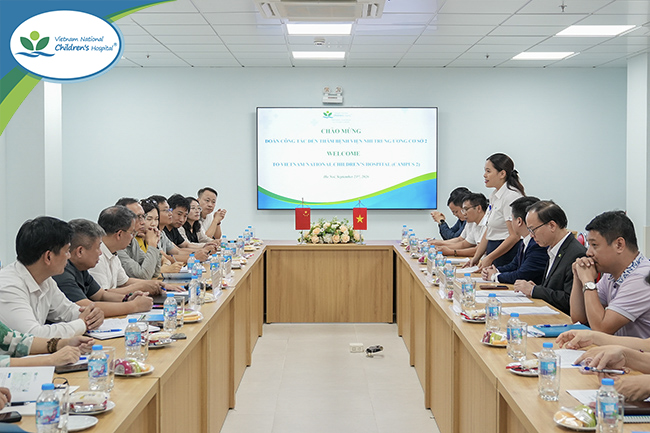
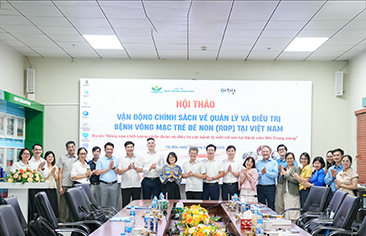
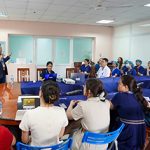
Representatives of Vietnam National Children’s Hospital, the Vietnam University of Traditional Medicine, and the study delegation from Tongji Architectural Design (Group) Co., Ltd., China, at the working session.
Representing the Vietnam University of Traditional Medicine, Assoc. Prof. Nguyen Quoc Huy introduced the University’s Campus 2 project, which is being developed with ODA funding. The project is planned to include both educational facilities and a teaching hospital on a 17-hectare site adjacent to VNCH Campus 2. The study visit aimed to draw on practical lessons from VNCH to support the development of an appropriate and feasible design plan.
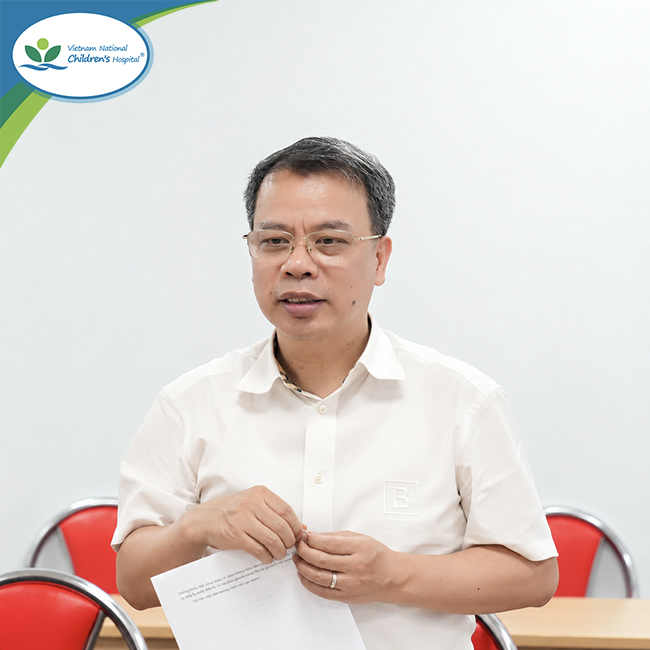
Assoc. Prof. Nguyen Quoc Huy introduces the University’s Campus 2 project and the objectives of the field visit.
During the working session, Prof. Tran Minh Dien shared VNCH’s experience in developing and putting Campus 2 into operation. With a capacity of 300 beds, the new campus was established to reduce pressure on the Hospital’s main campus while expanding access to high-quality pediatric examination, treatment, and healthcare services.
He highlighted several important considerations in hospital development, including determining an appropriate bed capacity from the planning stage, reserving sufficient space for highly specialized clinical services, involving healthcare professionals in the design process to optimize functional arrangements and patient flows, and introducing different functional areas into operation in phases to ensure safety and effective quality control.
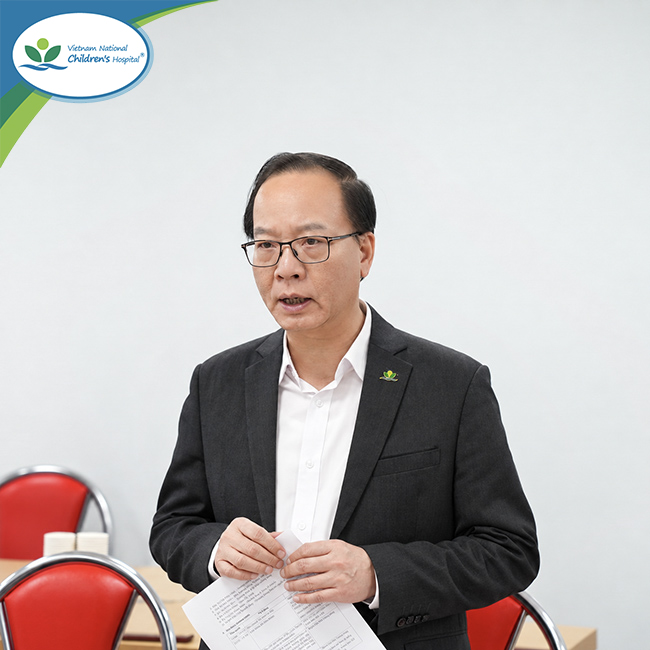
Prof. Tran Minh Dien shares practical lessons in spatial planning, functional layout, and the organization and operation of VNCH Campus 2.
During further discussions, Dr. Cao Viet Tung, MD, PhD, Vice Director in charge of professional affairs, and Hoang Minh Phuong, PhD, Vice Director in charge of financial affairs, exchanged views with the delegation on supporting technical infrastructure, investment structures for medical equipment, and approaches to the safe phased operation of functional areas.
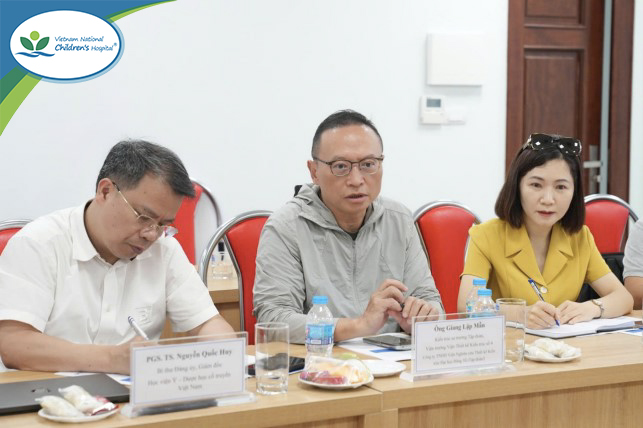
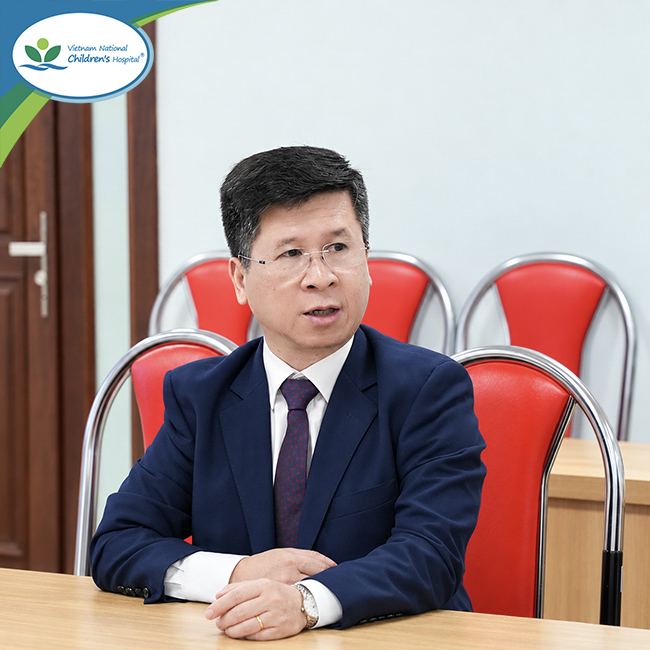
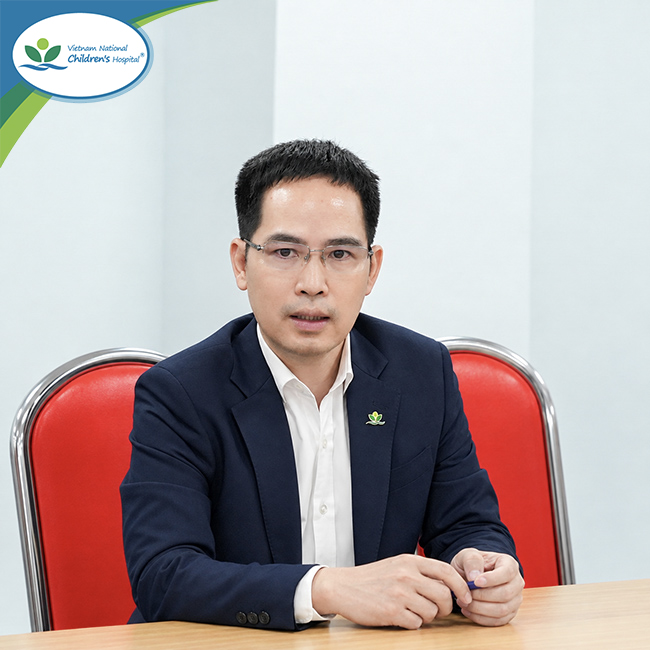
Dr. Cao Viet Tung and Mr. Hoang Minh Phuong engage in an in-depth discussion with the expert delegation on technical infrastructure connectivity and optimization of clinical flows.
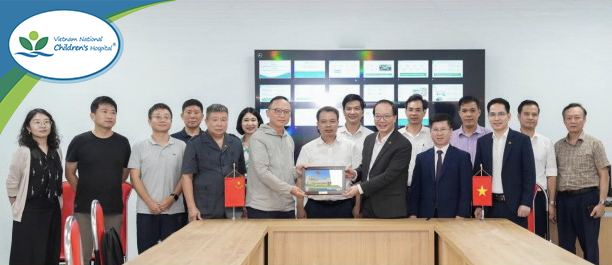
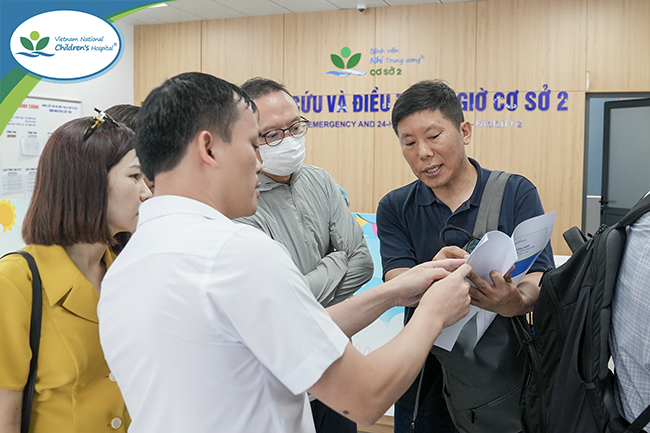
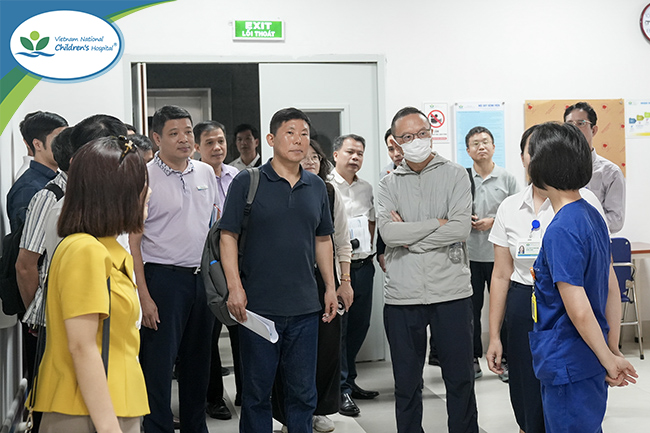
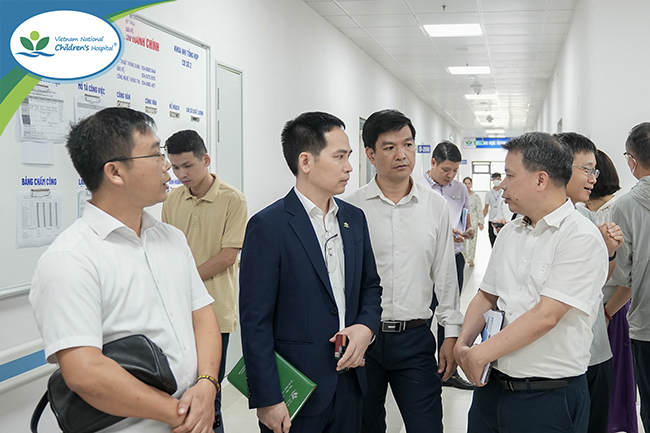
The delegation tours the campus, functional buildings, and modern medical equipment systems at Vietnam National Children’s Hospital Campus 2.
Children’s Hospital 1 Visits VNCH for Professional Exchange
On the morning of September 23, VNCH welcomed a delegation from Children’s Hospital 1 for a working visit aimed at exchanging practical experience in the development of advanced medical programs and specialized techniques.
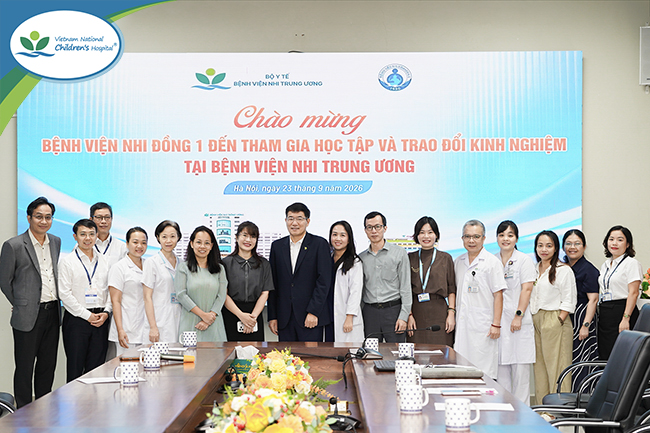
Representatives of the Boards of Directors and leaders of specialized units from the two hospitals attend the working session.
Dr. Nguyen Thi Thanh Huong, MD, MSc, Specialist Level II, Vice Director of Children’s Hospital 1, who led the delegation, highlighted the longstanding cooperation between the two leading pediatric referral hospitals. She expressed particular interest in learning from VNCH’s organizational models and clinical processes in areas including surgery for drug-resistant epilepsy, infection control in bone marrow and stem cell transplantation, and the standardization of advanced genetic and biochemical laboratory systems.
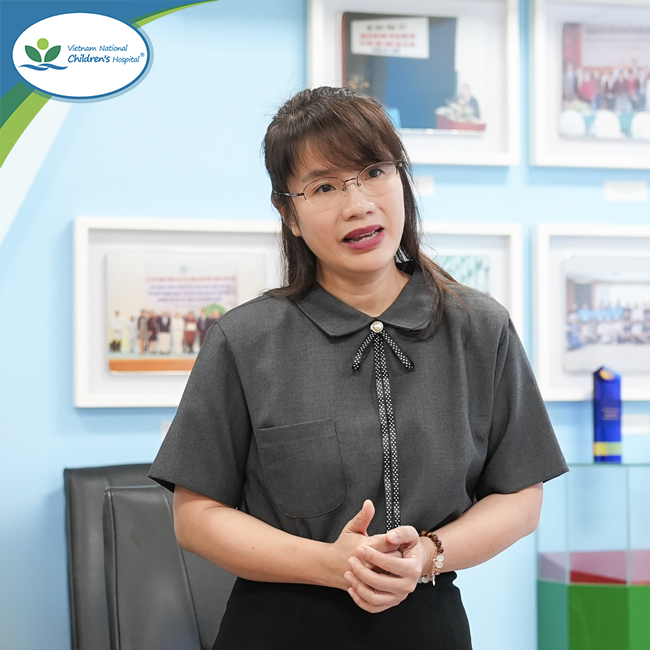
Dr. Nguyen Thi Thanh Huong shares the hospital’s directions for cooperation and its interest in exchanging professional experience with Vietnam National Children’s Hospital.
Welcoming the delegation, Phan Huu Phuc, MD, PhD, Deputy Director of Vietnam National Children’s Hospital, reaffirmed VNCH’s willingness to share its clinical and professional management experience. He also highlighted the Hospital’s strategic focus on highly specialized medical technologies, including the development from stem cell transplantation toward a comprehensive Center for Regenerative Medicine and Cell Therapy, as well as further advances in cardiovascular intervention and neurosurgery.
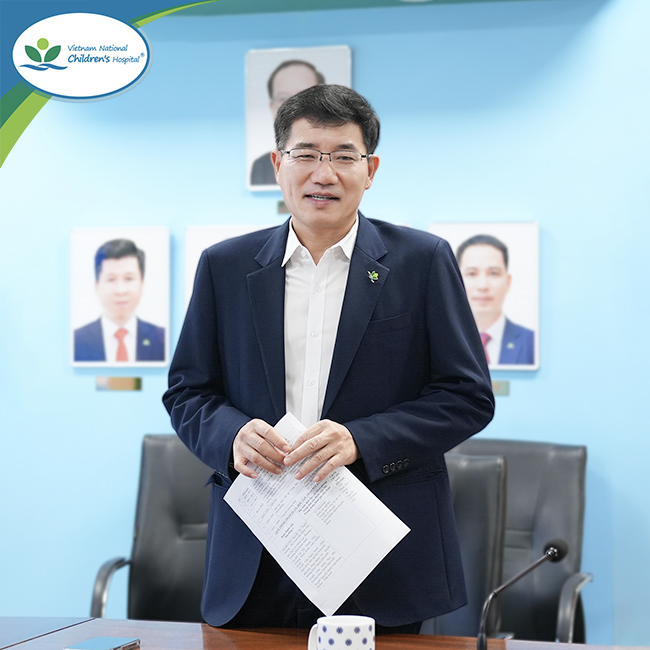
Dr. Phan Huu Phuc reaffirms VNCH’s commitment to accompanying and sharing professional expertise with Children’s Hospital 1.
Following the discussion, the Children’s Hospital 1 delegation visited and exchanged professional experience at VNCH’s Neurology Center, Center for Regenerative Medicine and Cell Therapy, laboratory units, and specialized outpatient services.
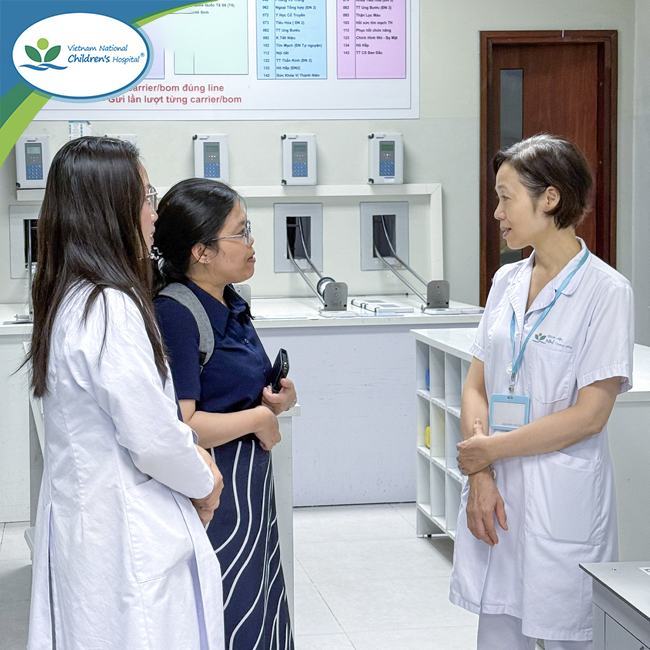
The Children’s Hospital 1 delegation conducts a field visit and exchanges professional experience at VNCH’s centers and clinical departments.
The successful working session marked another step forward in in-depth professional exchange between Vietnam National Children’s Hospital and Children’s Hospital 1, further strengthening the close cooperation between the two leading pediatric hospitals. Both institutions share the common goal of improving treatment quality and providing advanced medical services for the care and protection of future generations.
At the conclusion of the working programs, representatives of both visiting delegations expressed their appreciation for the warm reception and the valuable, practical experience shared by Vietnam National Children’s Hospital, providing an important foundation for the implementation of the University’s project in the coming period.