From September 21 to 25, 2026, experts from APLS (Australia) returned to the Vietnam National Children’s Hospital to continue their in-depth training partnership in pediatric emergency care. During the program, 7 Australian experts and 7 APLS instructors from the Vietnam National Children’s Hospital jointly taught, shared experiences, and conducted two back-to-back courses: the Generic Instructor Course (GIC) and the Paediatric Life Support (PLS) course.
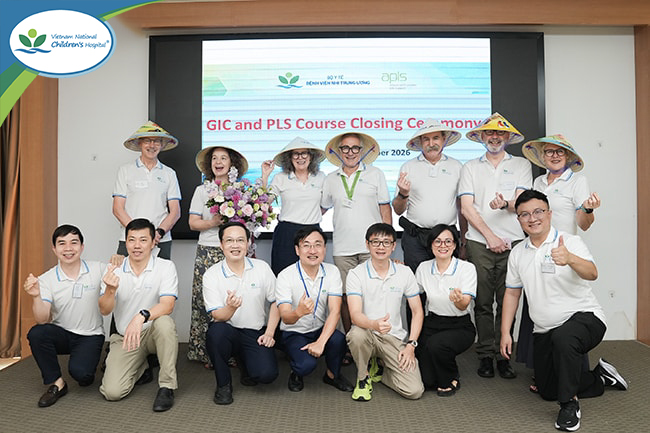
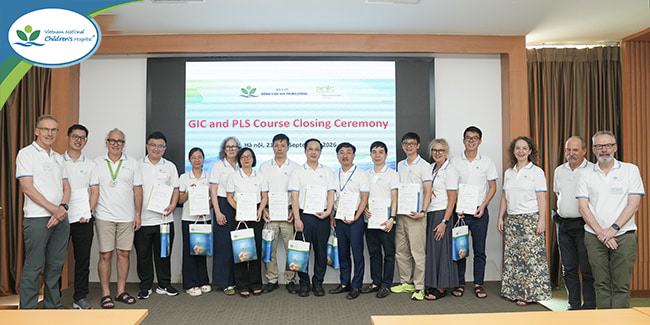
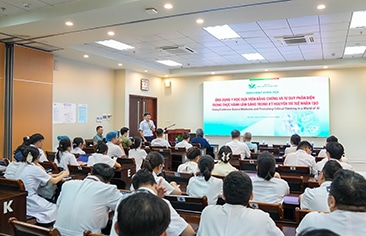
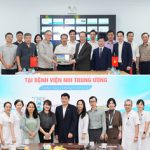
APLS (Australia) experts and Vietnam National Children’s Hospital instructors at the training program.
This program builds on years of collaboration between both organizations while introducing updated teaching methods and curriculum changes for APLS (Australia) in 2026. A key highlight of this year’s program was connecting instructor training directly with practical teaching. After completing the 3-day GIC course, instructors immediately co-taught the 2-day PLS course, giving them a chance to apply their newly updated skills in a real classroom setting.
Updated Teaching Methods in GIC
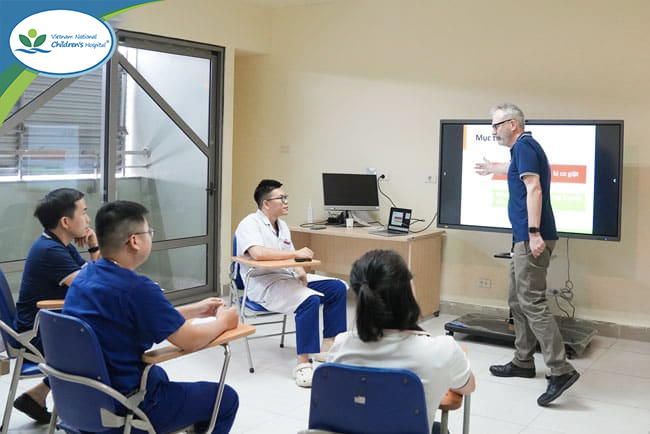
A major update in this GIC course was introducing teaching methods from the 4th edition of the “Blue Book”, a guide for clinical teachers. Rather than focusing solely on the content an instructor delivers, this approach focuses on how learners absorb, practice, and use that knowledge. During sessions, instructors led group discussions, guided hands-on practice, and presented real-world scenarios for trainees to analyze and solve. Small group activities and clinical simulations were widely used to maximize practice time and peer discussion.
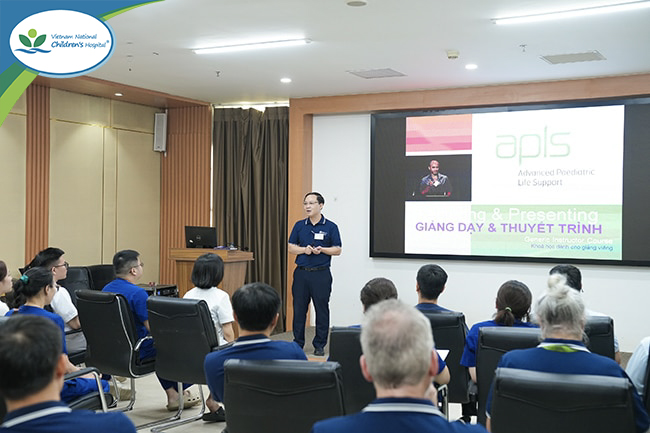
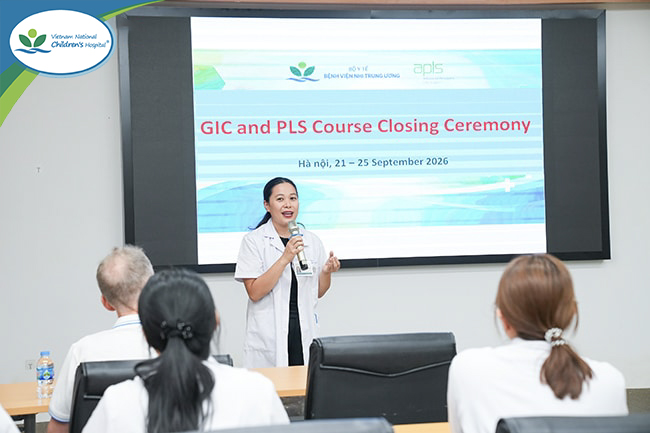
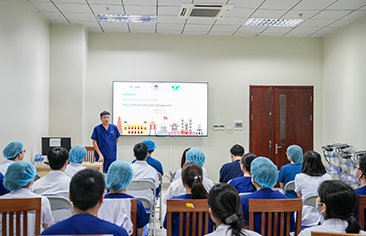
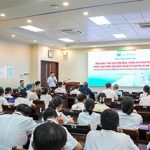
Dr. Le Ngoc Duy, Head of the Emergency and Poison Control Department at the Vietnam National Children’s Hospital, teaching during the course.
After each scenario, instructors and trainees reviewed what went well, what was challenging, and how to improve. Feedback went beyond identifying right or wrong answers, it helped trainees understand their decision-making process and connect what they learned to their daily work with patients.
Instructors were also trained to structure sessions using the POFC model (Prepare – Open – Facilitate – Close), covering everything from preparing materials and setting up the environment to guiding the learning process and summarizing practical takeaways.
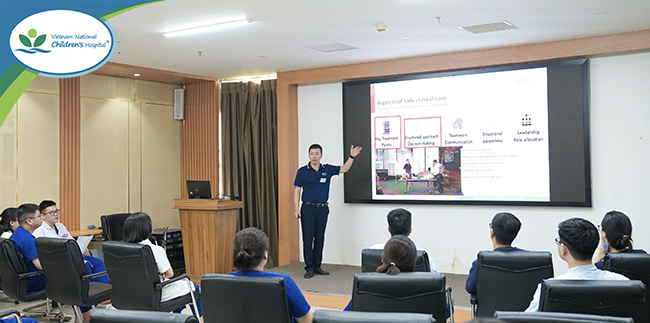
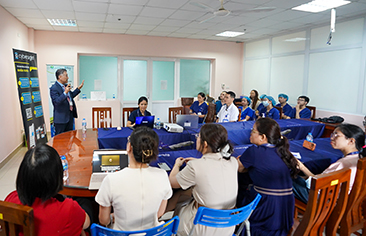
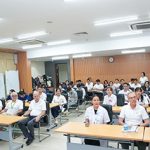
GIC trainees practicing teaching and receiving feedback.
Key Changes in the 2026 APLS Curriculum
Alongside new teaching methods, the Australian experts introduced updates to the 2026 APLS curriculum. The core focus remains a step-by-step, systematic approach to severely ill or injured children: recognizing critical illness early, setting priority actions, intervening promptly, and reassessing after treatment.
The course structure was also refined. Learners completed preliminary theory online beforehand, leaving maximum classroom time for hands-on skills practice, group discussions, and simulated emergency scenarios. Updating both clinical content and teaching methods helps instructors at the Vietnam National Children’s Hospital adopt the latest APLS standards and adapt them effectively for training across Vietnam.
Immediate Application in the PLS Course
Right after the GIC course, the Australian experts and local instructors ran a 2-day PLS course for medical professionals, including resident doctors from Hanoi Medical University, VNU School of Medicine and Pharmacy, Thai Nguyen University of Medicine and Pharmacy, and other institutions.
In the PLS course, trainees practiced handling common pediatric emergencies, such as breathing distress, shock, physical trauma, and critical resuscitation. The simulated cases mirrored real-world clinical situations. Trainees had to quickly assess the child’s condition, set priorities, perform emergency procedures, assign roles, and coordinate with team members.
After each simulation, instructors and trainees reviewed the team’s performance. This helped participants not only remember the steps but also understand the reasoning behind each choice and how to work smoothly as a team.
This setup allowed instructors to put their newly updated GIC teaching skills into practice right away, with direct coaching and feedback from the Australian experts.
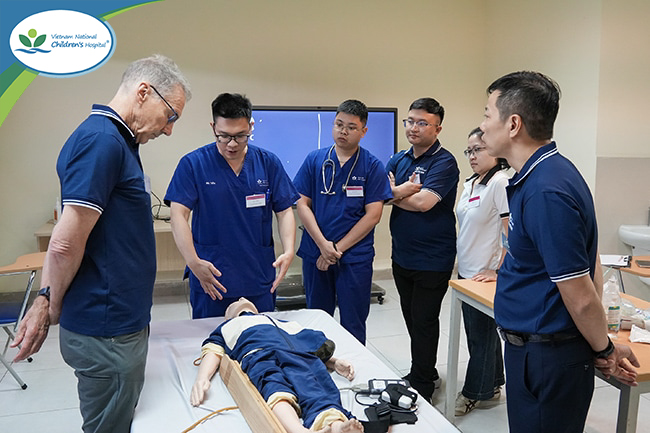
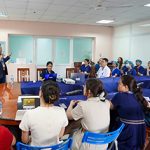
Vietnamese and Australian instructors guiding trainees during practice sessions.
Through this partnership, hospital instructors are taking on a larger role in organizing and running these courses. At the same time, bringing resident doctors from various medical universities into the PLS course helps introduce a systematic approach to pediatric emergency care early in their medical careers.
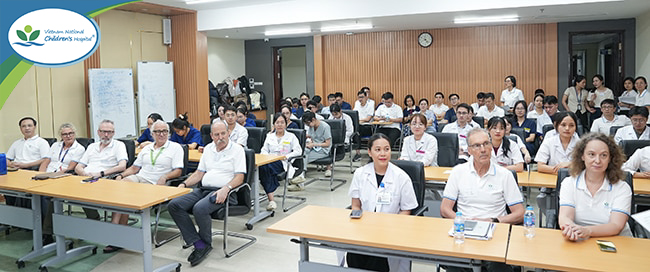
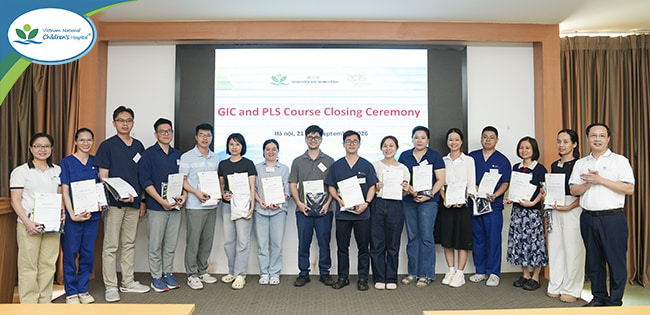
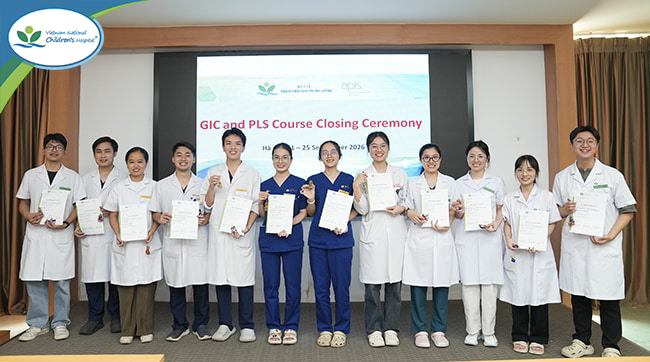
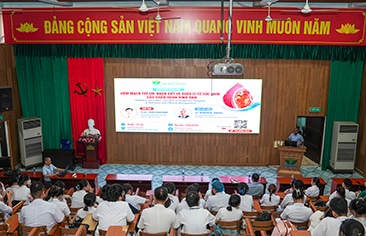
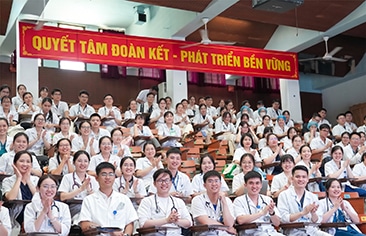
Instructors and trainees at the training program.
In pediatric emergencies, the first few minutes are critical. Recognizing a deteriorating child early, prioritizing treatment correctly, and working effectively as a team can directly change patient outcomes. Beyond updating medical knowledge, the partnership between the Vietnam National Children’s Hospital and APLS (Australia) focuses on a practical goal: helping doctors master a systematic approach to emergency care and building a strong team of local instructors to teach these life-saving skills to others.
Moving forward, these updated methods and course materials will be integrated into the Vietnam National Children’s Hospital’s ongoing pediatric emergency training programs.
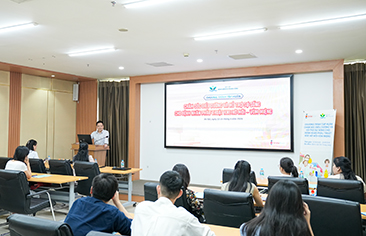
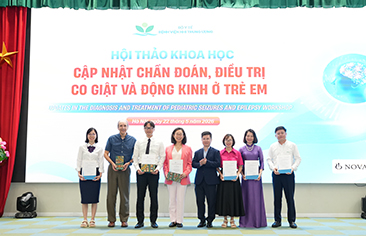
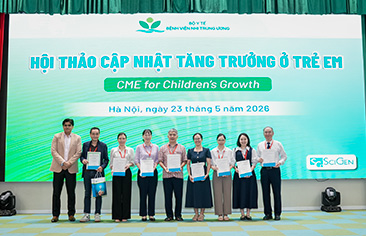
Some images from the program: