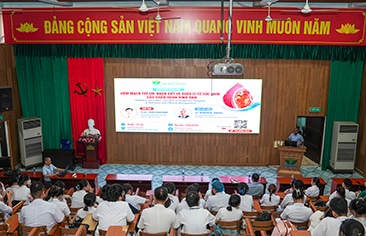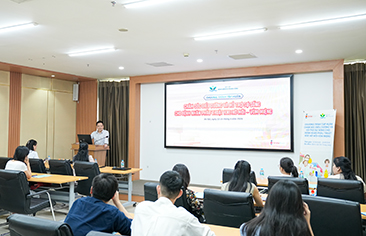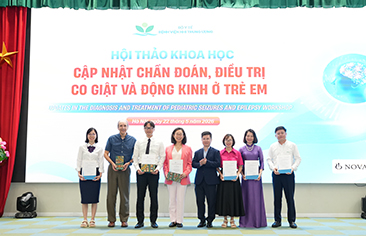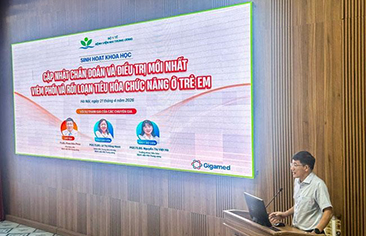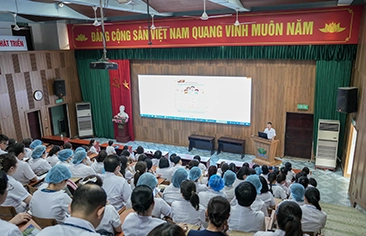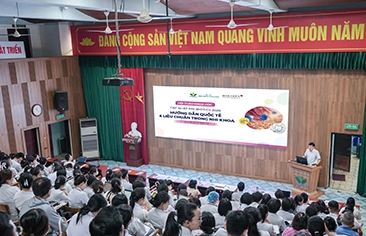
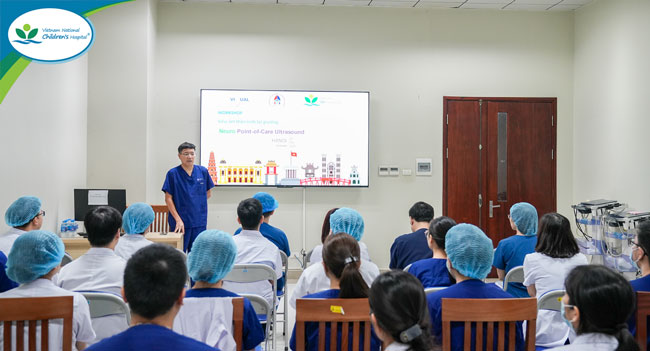
On 08/05/2026, at the Department of Medical Intensive Care of Vietnam National Children’s Hospital, a one-day training course on Bedside Neuro Point-of-Care Ultrasound (Neuro POCUS) was conducted for hospital physicians. The program aimed to update modern neuro-ultrasound techniques and thereby improve the monitoring and treatment of critically ill pediatric patients.
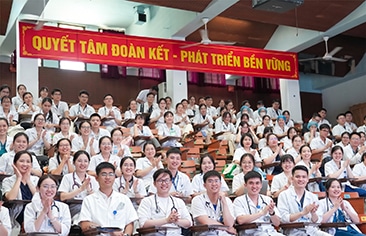
A total of 23 participants—including leaders and physicians—attended from the Neurology Center, Department of Emergency and Poison Control, Department of Medical Intensive Care, The Center for Tropical Diseases, Surgical Intensive Care Unit, and the Department of Anesthesiology and Critical Care. These units frequently manage severe neurological conditions, where rapid assessment and close monitoring are essential during resuscitation and intensive care.
Why Neuro POCUS matters in pediatric critical care
Point-of-care ultrasound (POCUS) is increasingly recognized as an essential tool in emergency and critical care settings due to its ability to provide rapid, noninvasive bedside information. POCUS has become an increasingly prominent and irreversible trend in clinical practice.
Within this field, Neuro POCUS is a specialized area that requires well-structured training and highly qualified instructors to ensure accuracy and safety for pediatric patients. Bedside neuro-ultrasound can help clinicians detect early signs of raised intracranial pressure and other acute neurological abnormalities without waiting for more complex imaging modalities.
Hospital leadership perspective
At the program, Dr. Phan Huu Phuc, MD, PhD, Deputy Director of Vietnam National Children’s Hospital, noted that neurocritical care remains challenging because monitoring often relies primarily on clinical signs or invasive techniques. Expanding the use of bedside ultrasound provides clinicians with an additional effective assessment tool, supporting timely and more accurate clinical decision-making. Hospital leadership encourages physicians—especially junior doctors—to proactively adopt new techniques and gradually integrate bedside ultrasound into routine clinical practice.
Faculty and course structure
The training combined lectures with hands-on practice and featured instructors with extensive clinical experience, including:
- Dr. Ngo Tien Dong, MD (Senior Specialist II) – Department of Medical Intensive Care
- Dr. Hoang Kim Lam, MD, PhD – Department of Medical Intensive Care
- Dr. Nguyen Van Thang, MSc, MD – Department of Medical Intensive Care
- Dr. Le Nhat Cuong, MSc, MD – Department of Medical Intensive Care
- Dr. Bui Thanh Liem, MSc, MD – University of Medicine and Pharmacy at Ho Chi Minh City
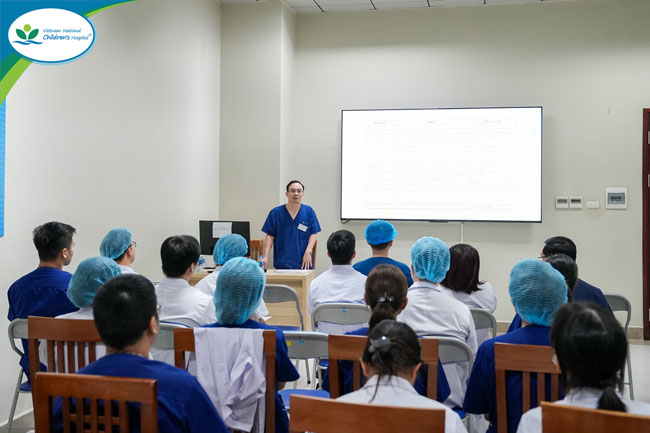
The curriculum was designed to be practice-oriented and aligned with clinical needs. Participants were trained on:
- Ultrasound principles and machine handling
- Neuroanatomy and brain physiology as seen on cranial ultrasound
- Overview of cranial ultrasound techniques, anatomical variants, and common pitfalls

Hands-on training: key applications
Practical training was a major focus. Participants were divided into four small groups to conduct scanning under the direct supervision of the instructor. Practice topics included:
- Ultrasound assessment of the pupil and optic nerve sheath
- Transcranial Doppler ultrasound for monitoring intracranial hypertension and subarachnoid hemorrhage
- Case analysis and clinical scenario discussions to strengthen real-world application
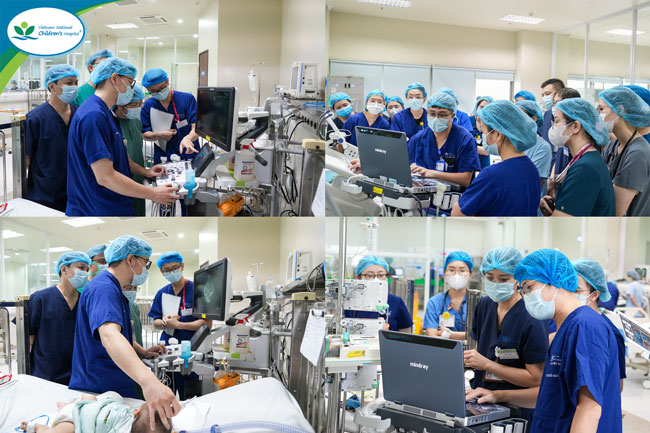
Experts noted that bedside neuro-ultrasound is particularly useful in young children—especially those with an open fontanelle—enabling early detection of abnormalities and bedside monitoring of disease progression.
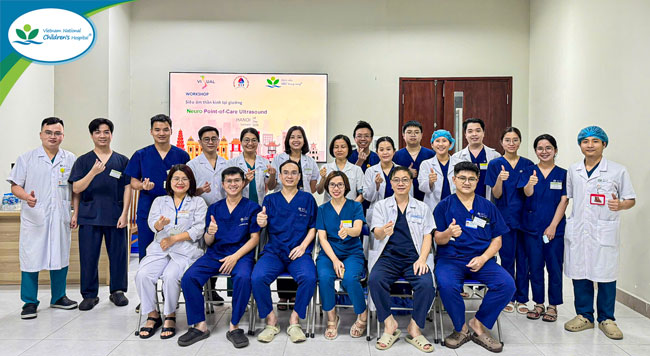
Next course
A second training course is planned for 10/06/2026 to expand training opportunities for Hospital physicians. Continued implementation of specialized courses is expected to help standardize Neuro POCUS techniques, strengthen neurocritical care capacity, and improve outcomes for critically ill pediatric patients.
Digital Information Office – Training and Research Institute for Child Health