Pectus carinatum–excavatum is a complex and rare anterior chest wall deformity. It is characterized by a combination of protrusion and depression of the sternum. Because it involves mixed structural abnormalities, diagnosis and surgical treatment are often more challenging than in isolated pectus carinatum or pectus excavatum.
Recently, doctors at the Center for General Surgery, Vietnam National Children’s Hospital, successfully treated N.D., a 5-year-old girl from Ninh Binh, with a complex chest wall deformity using a minimally invasive endoscopic double-bar technique, also known as the Sandwich procedure.
Progressive chest wall deformity affecting the child’s respiratory function
According to the family, the child’s chest wall deformity was first detected about one year ago. Over the past month, she developed fatigue, chest tightness, and shortness of breath during physical activity. The family took her to a local hospital, after which she was referred to Vietnam National Children’s Hospital.
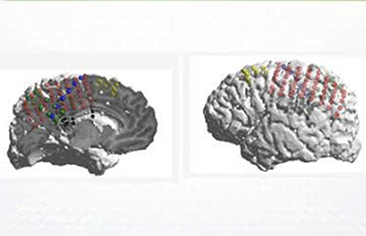
At the Center for General Surgery, clinical examination and advanced imaging confirmed a complex chest wall deformity involving both protrusion and depression of the sternum. Chest CT showed abnormal anterior curvature and ossification of the sternal body, along with hypertrophy of the costal cartilages. The lower third of the sternal body was also depressed inward, compressing the heart and mediastinum.
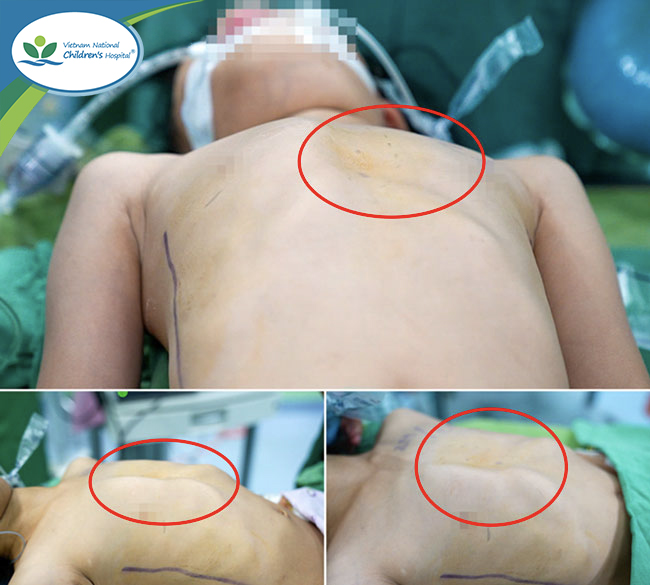
Endoscopic double-bar Sandwich technique: an effective solution for complex pectus carinatum–excavatum deformity
Dr. To Manh Tuan, MD, PhD, former Head of the Division of Thoracic Surgery, Center for General Surgery, Vietnam National Children’s Hospital, said congenital chest wall deformities occur in about 1 in 2,000 children. Mixed deformities combining pectus carinatum and pectus excavatum are rare and complex; beyond cosmetic concerns, they may affect cardiopulmonary function and the child’s psychological well-being.

Previously, treatment for these cases mainly relied on open surgery, involving multiple steps to cut, reshape, and reconstruct deformed cartilage and chest bone segments to restore the chest wall to an appropriate shape. Today, however, the development of the endoscopic double-bar technique (Sandwich procedure) offers an effective treatment option for complex chest wall deformities. The technique was first described by Prof. Hyung-Joo Park (Republic of Korea) and colleagues in 2007.
According to Dr. To Manh Tuan, patient N.D. had a complex combined deformity, with both pectus carinatum and pectus excavatum. The protruding component was dominant and accompanied by a torsional deformity of the sternum. After specialized consultation and comprehensive assessment, the surgical team decided to apply the Sandwich technique to correct both structural abnormalities of the chest wall simultaneously.
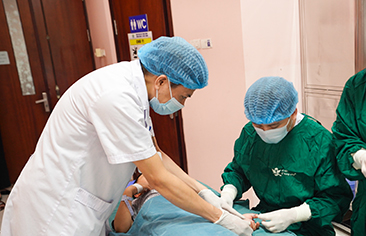
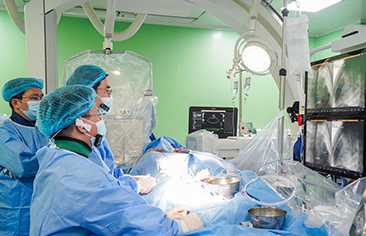
On 04/06/2026, the child underwent surgery. Through minimally invasive approaches on both sides of the chest wall, the surgical team dissected the retrosternal space, fully released adhesions and traction structures, and created a safe space between the sternum and the heart, lungs, and mediastinum.
Based on the chest wall morphology, doctors shaped a system of lifting and compression bars suited to the child’s thoracic structure. The lifting bar was placed behind the sternum to elevate the depressed area, while the compression bar was fixed anteriorly to correct the protruding component. The combined action of the two metal bars repositioned the sternum into a balanced alignment, close to normal anatomy.
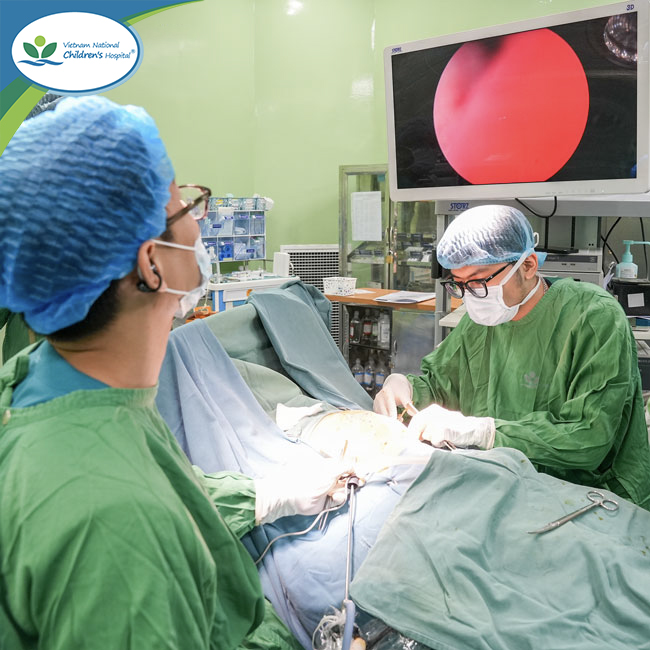
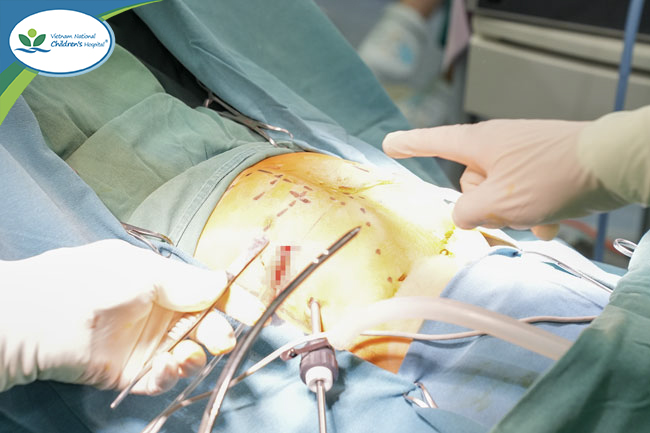
The Sandwich technique was performed under endoscopic guidance, allowing the surgeons to directly observe the procedure while using two metal bars to correct both the protruding and depressed parts of the child’s chest wall.
After surgery, the child’s condition remained stable, and she was discharged after seven days of treatment. Dr. To Manh Tuan noted that with this method, after around two years—when the metal bars are removed—the child’s chest is expected to remain balanced and close to normal.
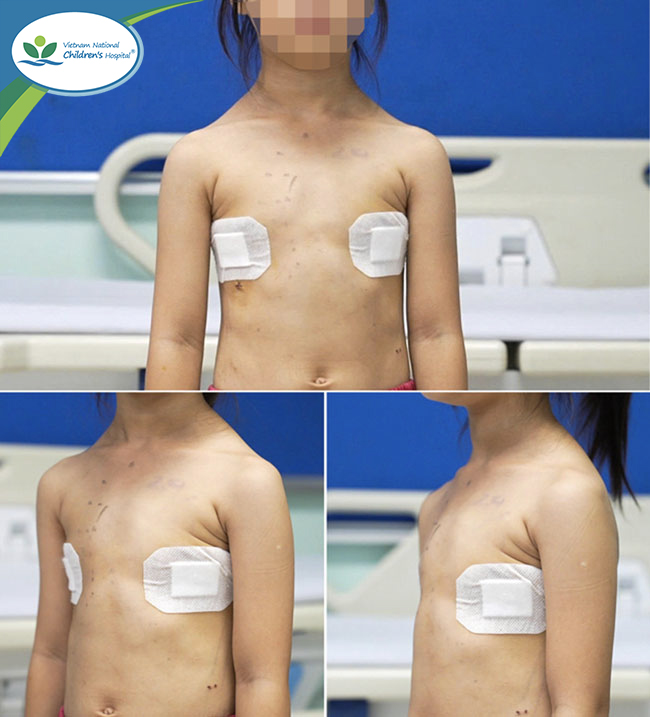
The child’s chest wall shape improved markedly after surgery.
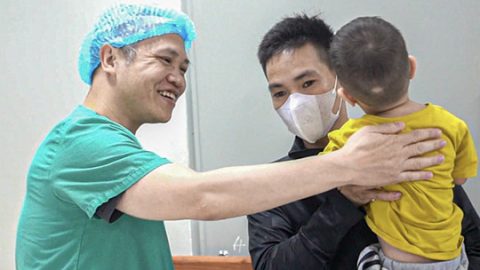
Seeing her daughter happily talking with doctors and nurses on the day of discharge, the child’s mother, Ms. Th., remained emotional when recalling the long period of anxiety as the chest deformity became increasingly severe. “When the doctors told us the surgery was successful, our whole family was overwhelmed. The happiest thing is seeing my child healthier, no longer short of breath, and with a much more balanced chest,” she shared.

The child’s chest wall shape improved markedly after surgery.
More treatment opportunities for children with complex chest wall deformities
The successful implementation of the endoscopic double-bar Sandwich technique at Vietnam National Children’s Hospital marks a new step forward in treating complex pediatric chest wall deformities. The success of this surgery not only gives the child a chance for healthy development but also affirms the Hospital’s capacity to master advanced techniques for complex chest wall deformities.
Experts recommend that parents take children to specialized medical facilities if they notice abnormal chest wall shapes, such as protrusion, depression, or asymmetry, so that children can be examined and receive timely treatment counseling.
(Patient information has been changed.)
Dr. Nguyen Minh Khoi, MSc, Deputy Head in charge, Center for General Surgery
International Medical Center
Digital Information Office – Training and Research Institute for Child Health