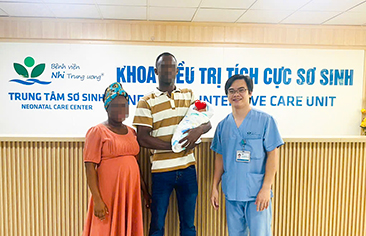
During treatment, doctors at Vietnam National Children’s Hospital identified a highly unusual case: a newborn boy with an extremely rare blood group (sometimes referred to as the “diamond blood group”). This is the first time the Hospital has recorded such a case. After nearly two weeks of intensive treatment, the infant stabilized and was discharged.
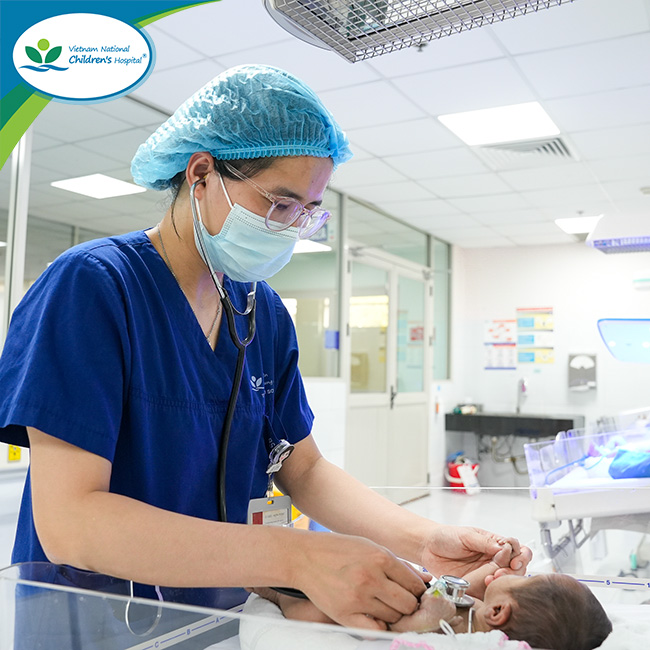
From neonatal jaundice to a rare diagnosis
The patient was a newborn boy (4 days old) from Ha Tinh Province. He was born healthy, but after only 8 hours developed progressively worsening jaundice. At a local hospital, the infant was found to have severe anemia with hemoglobin 86 g/L. Despite multiple tests, the cause remained unclear and the condition did not improve.
On 12/04/2026, the infant was transferred to Vietnam National Children’s Hospital in severe condition, with severe jaundice, neonatal sepsis, and respiratory failure.
At the Neonatal Care Center, laboratory evaluation showed hemoglobin had decreased further to 71 g/L, with severe jaundice, leading to an urgent indication for exchange transfusion.
Because the mother had just undergone a cesarean section and could not donate immediately, physicians urgently cross-matched the infant’s blood with available group O blood units overnight, but no compatible units were found.
After multidisciplinary discussion, the blood sample was sent to the National Institute of Hematology and Blood Transfusion for advanced testing. Results showed the infant had anti-Jk3 antibodies and belonged to an extremely rare blood type (also referred to as “diamond blood”). The blood bank did not have a compatible unit available for transfusion.
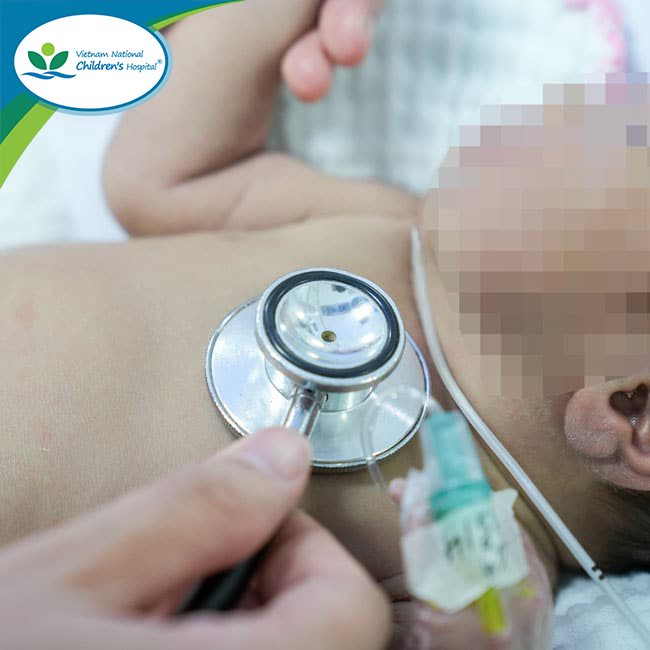
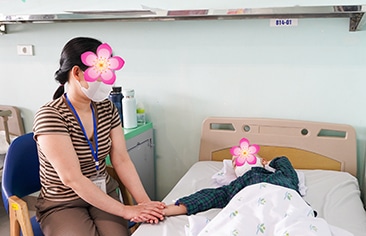
The infant was closely monitored at the Neonatal Care Center during the first days of admission.
A critical decision and a turning point in treatment
After confirming the extremely rare blood type, the team screened family members to identify a compatible donor. Although one family member was found to be compatible, they were not eligible to donate due to hepatitis B infection.
As the infant’s anemia worsened and no compatible blood was available, clinicians had to consider using the mother’s blood, even though she had recently had surgery and maternal donation is generally not the preferred option for neonatal transfusion. This decision was made after multidisciplinary consultation, as it was determined to be the only viable emergency source. Throughout the donation process, the mother was closely monitored and maximum safety measures were applied.
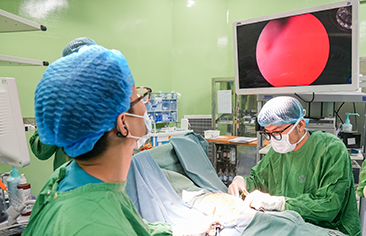
The infant received transfusion and exchange transfusion. After about two days, the condition improved markedly; the infant no longer required respiratory support or phototherapy. After nearly two weeks of treatment, the infant was discharged.
Before transfusion, the blood was processed and red blood cells were separated and screened under strict protocols to reduce the risk of immune reactions in the infant.
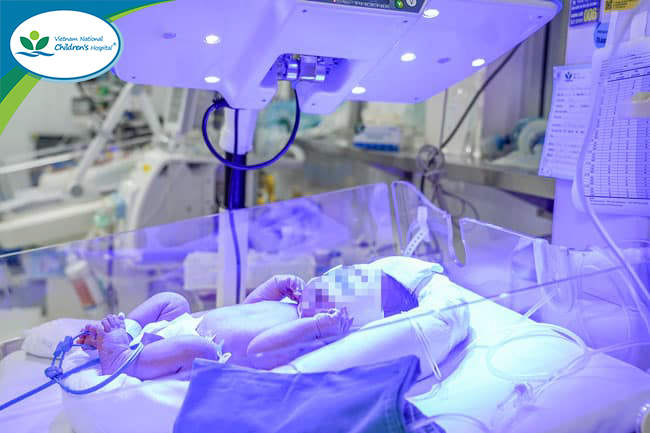
The baby’s mother expressed heartfelt thanks to the medical team for their dedicated care and efforts during the critical period.
Jk(a-b-3) blood group in the Kidd system: an extremely rare type
According to Dr. Pham Thao Nguyen, MD, MSc, Neonatal Care Center, Vietnam National Children’s Hospital, beyond the familiar ABO system, 43 blood group systems have been identified. The blood type Jk(a-b-3) belongs to the Kidd system and is caused by mutations in the SLC14A1 gene on chromosome 18, resulting in red blood cells lacking the Jka, Jkb, and Jk3 antigens.
Because these antigens are absent, finding compatible blood is extremely difficult—especially when the patient has developed anti-Jk3 antibodies, which means transfusion typically requires blood of the same rare type. For this reason, it is classified as an extremely rare blood group (also known as “diamond blood”).
Successfully identifying and managing this case is not only a professional milestone for Vietnam National Children’s Hospital, but also demonstrates the effectiveness of inter-hospital collaboration in rare and emergency situations. In an unprecedented case, clinicians adapted flexibly to find an appropriate solution while ensuring patient safety.
In 2025, the Neonatal Care Center recorded 359 admissions due to neonatal jaundice (10% of inpatients). Among these, blood group incompatibility accounted for 28.7% (ABO 25.3%, Rh 3.3%), and 2.5% progressed to kernicterus. However, this case fell outside the common causes.
This case also provides valuable data on rare blood groups in Viet Nam, supporting a more proactive approach to screening, storage, and linking rare blood sources—an important factor in improving treatment outcomes and transfusion safety in the future.
Dr. Pham Thao Nguyen, MD, MSc – Neonatal Care Center
Digital Information Office – Training and Research Institute for Child Health