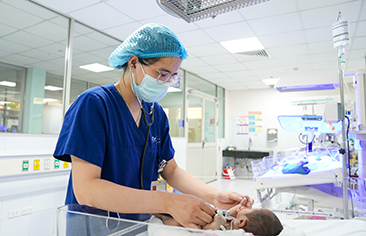
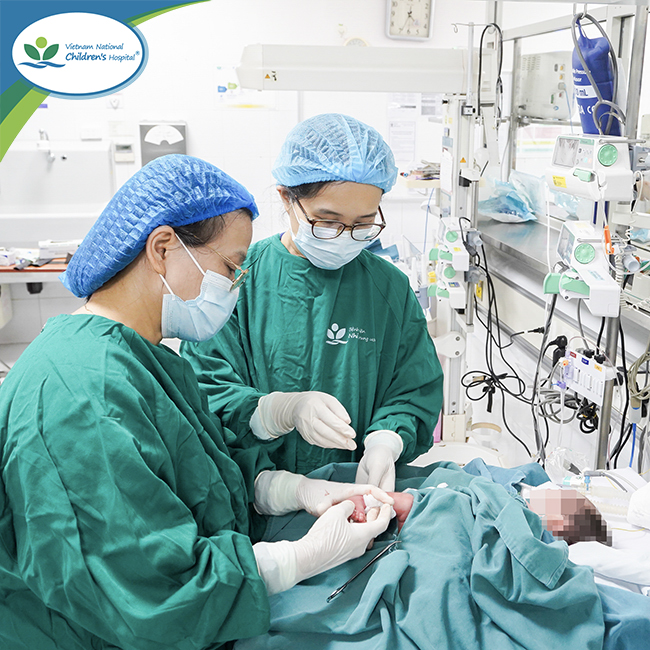
After birth, a 1-day-old Ghanaian newborn boy developed severe hemolytic jaundice. Facing a life-threatening condition, doctors at Vietnam National Children’s Hospital urgently initiated resuscitation measures and raced against time to find compatible blood to save the child’s life.
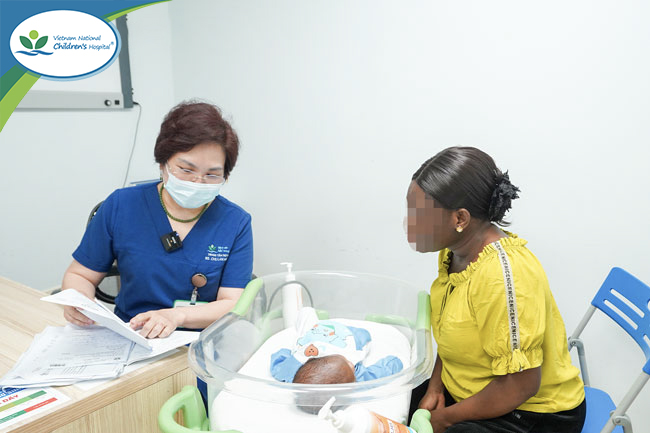
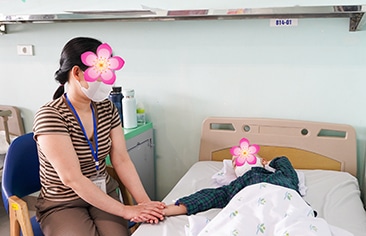
The Ghanaian baby returned for follow-up at Vietnam National Children’s Hospital after successful treatment; his health was stable, and he was developing well.
From jaundice to a rare diagnosis
The baby developed jaundice immediately after birth, which worsened rapidly within the first 20 hours of life. At a local hospital, he was diagnosed with severe jaundice. Despite laboratory testing and intensive phototherapy, the cause remained unclear and his condition did not improve. On 27/05/2026, he was transferred to Vietnam National Children’s Hospital.
At the Neonatal Care Center, the baby was noted to have generalized jaundice. Laboratory tests showed rapidly rising bilirubin levels and hemoglobin decreasing to 98 g/L. Notably, although both mother and baby had blood type O, Rh+, the baby still developed severe hemolysis. Given the critical progression, emergency exchange transfusion was indicated to control jaundice and anemia.
That night, doctors urgently performed compatibility testing between the child’s O, Rh+ blood type and the available O blood units at the Hospital, but no compatible blood unit was found.
After consultation, the blood sample was transferred to the National Institute of Hematology and Blood Transfusion for specialized testing. There, the baby was found to carry Anti-Fy3 antibody, an extremely rare antibody associated with the Duffy-null blood group. While waiting, the baby received intensive phototherapy and supportive medication to slow hemolysis and strengthen red blood cell stability.
A special decision in an emergency
After identifying that the baby carried an antibody associated with a rare blood group, doctors decided to mobilize the patient’s relatives for specialized testing to search for a compatible blood source. At that time, only the baby’s parents were living and working in Viet Nam. Testing showed that the father’s blood was incompatible. Doctors then had to consider using the mother’s blood. However, her test results showed anemia, with hemoglobin only 88 g/L, and she had recently undergone a cesarean section, so she was not eligible to donate blood.
As the child’s anemia worsened and no compatible blood unit was available, the baby faced the risk of progressing to heart failure, respiratory failure, apnea, and multi-organ failure.
Immediately, the Neonatal Care Center organized a multidisciplinary consultation and sought direction from Dr. Phan Huu Phuc, MD, Deputy Director of the Hospital. A special decision was made: to search for type O blood donors in the community, especially among African people living in Viet Nam—the group most likely to have compatible blood.
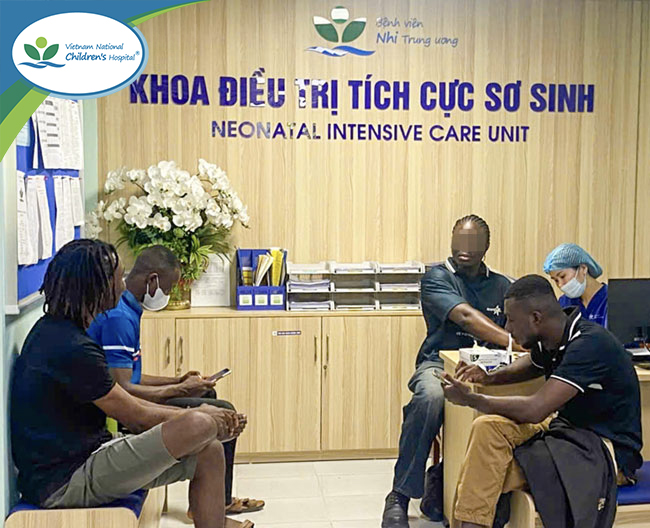
After 2 days of racing against time, among 25 blood donors (3 Vietnamese and 22 African donors), doctors identified 2 African donors with compatible blood.
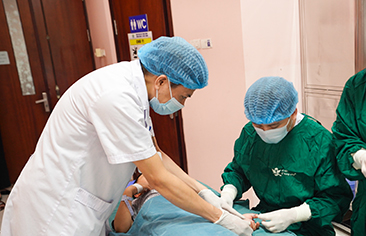
After the two compatible African donors were identified, doctors collected samples, processed the blood, and prepared transfusion steps for the baby in accordance with protocol.
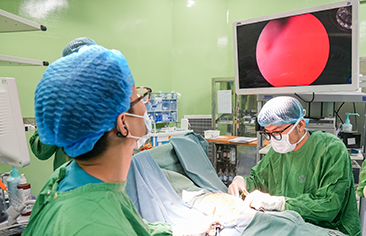
During blood collection, doctors closely monitored the process to ensure maximum safety for the donors. The blood was then processed, separated into red blood cell components, and screened under strict protocols to reduce the risk of immune reactions in the child.
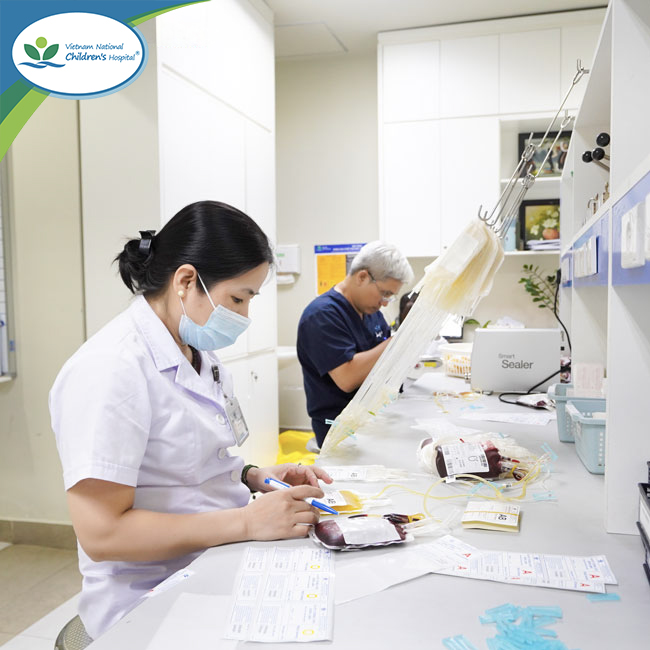
Dr. Ha Thi Thanh Huyen, Specialist Level II, Head of the Blood Bank & Transfusion Services, and colleagues prepared the blood product for transfusion.
The baby received the transfusion on the third day after admission. His condition improved significantly: jaundice decreased, his skin became pinker, he was alert and fed well, and he was discharged after 7 days of treatment.
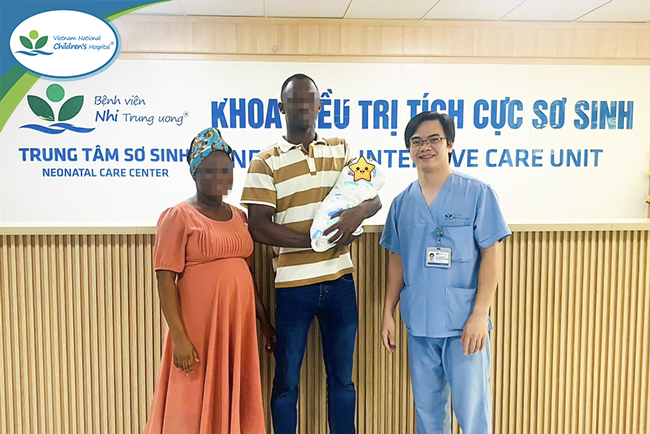
The family was overjoyed on the day their child returned home healthy after 7 days of hospital treatment.
At follow-up 3 weeks after discharge, the mother, Ms. A.G.A., shared: “When our baby recovered, our whole family was extremely happy and relieved. We would like to send our sincere thanks to the doctors and nurses of the Hospital. We truly appreciate everything you helped us with, from the big things to the smallest details, from the beginning to the end of the treatment journey.”
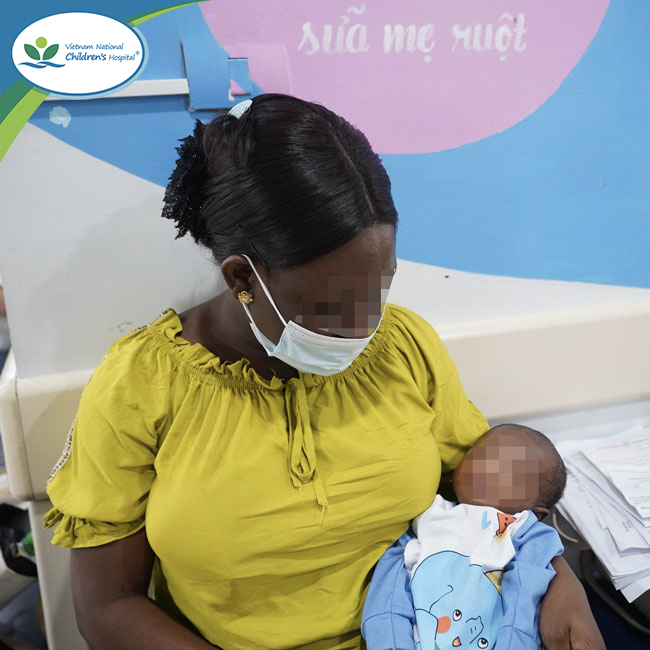
The baby returned for follow-up 3 weeks after discharge with stable health, and the family expressed their joy and gratitude to the medical team at Vietnam National Children’s Hospital.
Anti-Fy3 antibody and treatment challenges
In addition to the familiar ABO and Rh blood group systems, researchers have identified 46 other blood group systems, including the Duffy blood group system.
The Duffy blood group includes five major antigens on the red blood cell surface: Fya, Fyb, Fy3, Fy5, and Fy6, regulated by the ACKR1 gene located on chromosome 1.
The rarest antibody is Anti-Fy3, found in people with the Duffy-null blood group (lacking both Fya and Fyb antigens). This blood group is extremely rare among Asian and European populations and is mainly found in people of African descent (68–90%).
When a mother with the rare Duffy-null blood group carries a fetus with Duffy antigens inherited from the father, Anti-Fy3 antibodies can cross the placenta, circulate in the baby’s blood, attach to antigens on red blood cells, and destroy the child’s blood cells—causing jaundice and moderate to severe anemia.
According to Dr. Vu Thi Hue of the Neonatal Care Center, Vietnam National Children’s Hospital, this was a special case because the cause of hemolysis was not among the common ones. The condition can be detected prenatally through screening for unexpected antibodies in the mother’s blood. Unlike Rh incompatibility, there is currently no preventive medication for hemolytic jaundice caused by Duffy incompatibility during pregnancy. Therefore, early detection and timely postnatal management are especially important.
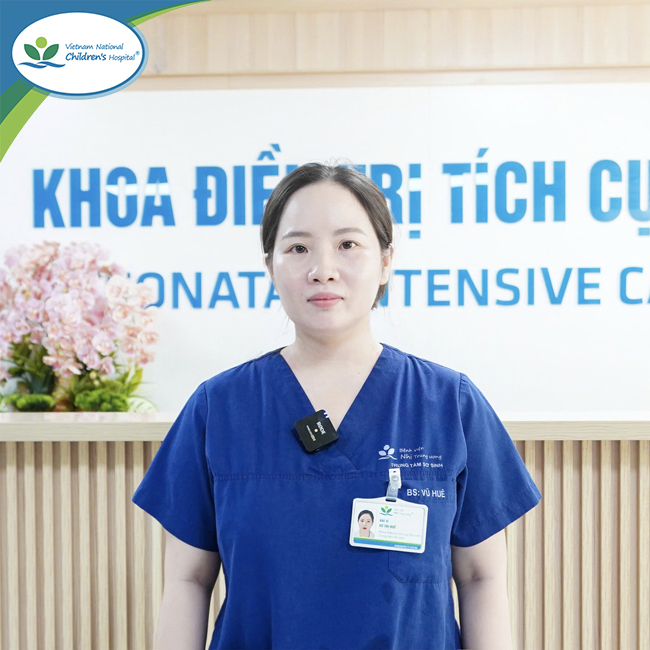
Dr. Vu Thi Hue noted that hemolysis due to Duffy incompatibility is rare and requires early detection and prompt management to protect newborn health.
Each year, the Neonatal Care Center receives hundreds of newborns for examination and hospitalization due to jaundice, mainly caused by ABO or Rh blood group incompatibility (approximately 28.7% in 2025). Through this case, doctors advise parents not to be complacent about neonatal jaundice. Jaundice can occur at different levels of severity and from many causes; therefore, early detection and timely treatment at a medical facility are extremely important.
Dr. Vu Thi Hue – Neonatal Care Center