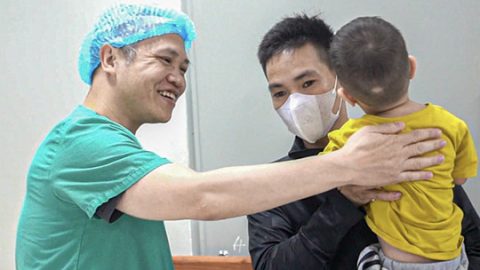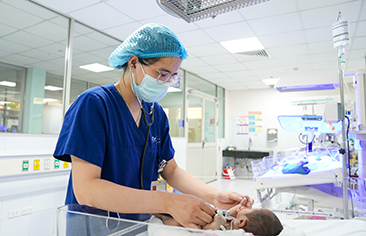
Recently, clinicians at the Adolescent Department – Center for Developmental Medicine and Mental Health, Vietnam National Children’s Hospital, received and treated a 13-year-old girl who engaged in self-harm by ingesting a high dose of analgesics and required hospitalization for an emotional and behavioral disorder.

Children who suffer pressure in silence
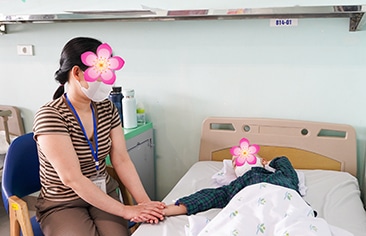
The patient was a 13-year-old girl in Hanoi. According to her family, she had been a well-behaved student with good academic performance. However, recently she had been staying up late to study and increasingly isolating herself in her room. She often worried about not meeting the academic expectations she and her family had for her.
After receiving a test result that did not meet her expectations, she became sad and highly stressed. During a psychological crisis, she took an overdose of painkillers in an attempt to end her emotional distress. When the family discovered the incident, they immediately brought her to Vietnam National Children’s Hospital for emergency care and assessment. Thanks to timely medical intervention, her physical condition is now stable. However, clinicians noted that psychological trauma may have long-term effects if not addressed with appropriate support.
At the Adolescent Department, another case—a 14-year-old girl—was also being treated for prolonged anxiety accompanied by recurrent panic attacks. Clinicians reported that the child attended a selective school and had good academic results, but over the past year had become increasingly worried about study and exam pressure, with symptoms including palpitations, rapid heartbeat, tremor, abdominal pain, insomnia, and unexplained fear. These anxiety symptoms intensified as exams approached. Recently, she began withdrawing, avoided communication, and engaged in self-harm by using a sharp object to cut her arm.
Why exam pressure can trigger anxiety and depression
According to Assoc. Prof. Ngo Anh Vinh, PhD, Head of the Adolescent Department, the two cases above represent only a small proportion of patients seen in the department. Each day, the department receives more than 50 children for consultation, mostly aged 10–15. Adolescence is a period of major psychological and physiological changes, making emotional disorders more likely.
Assoc. Prof. Ngo Anh Vinh emphasized that academic pressure today comes not only from schoolwork and examinations, but also from the broader mindset of “having to succeed” among both students and parents. In competitive environments, many students set goals such as achieving top scores, ranking first in class, or being admitted to selective schools; when results fall short, they may experience sustained anxiety and stress. In addition, family expectations can unintentionally add to children’s psychological burden.
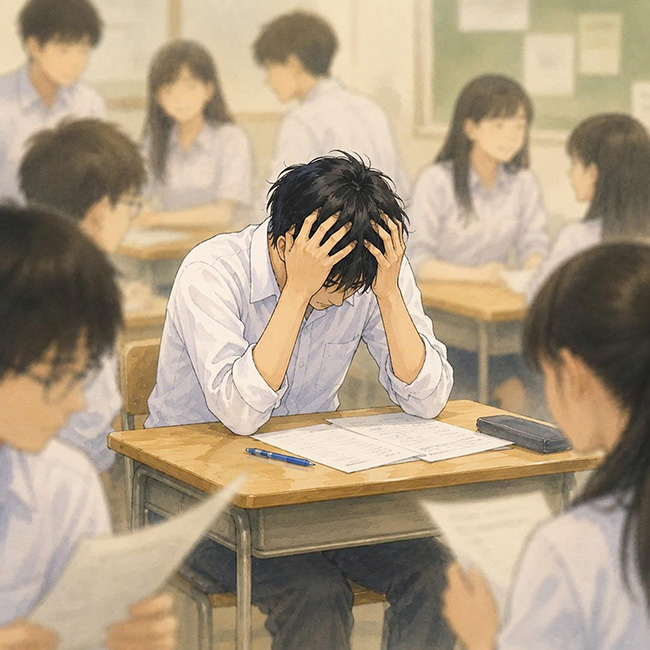
Exam pressure, performance expectations, and comparisons on social media may push children into stress, anxiety, and even depression.
Are anxiety and depression common in children and adolescents?
Anxiety and depression are common mental health disorders among children and adolescents and have become a global public health concern. In modern society—with pressures related to school, social relationships, and pubertal changes—the risk of mental health problems in children is rising. In the United States, nearly 8.3% of children aged 3–17 have an anxiety disorder. The National Institute of Mental Health estimates that among adolescents aged 13–18, the prevalence of anxiety disorders is 25%, and severe anxiety affects about 5.9%.
For depression, the World Health Organization (WHO) identifies it as a leading cause of disease burden and functional impairment among young people aged 10–19. In Viet Nam, although comprehensive national data are not yet available, recent studies suggest that depression prevalence among high school students ranges from 13% to 30%, from mild to severe. This indicates that school-based mental health is an issue requiring particular attention.
Experts note that anxiety and depression in children often result from multiple interacting factors such as genetics, individual psychological characteristics, and the living environment. In particular, academic pressure, expectations of being a “good child” and “high-achieving student” from families and schools, together with a lack of appropriate emotional sharing and psychological support, may inadvertently create long-term mental strain. Therefore, early detection, timely psychological support, and building positive school and family environments play a key role in protecting children’s and adolescents’ mental health.
Assoc. Prof. Ngo Anh Vinh noted that many children presenting for consultation try hard to maintain the image of being a “good student.” When they cannot meet expectations, they may develop prolonged stress, anxiety, or depression.
Common symptoms of anxiety and depression in adolescents
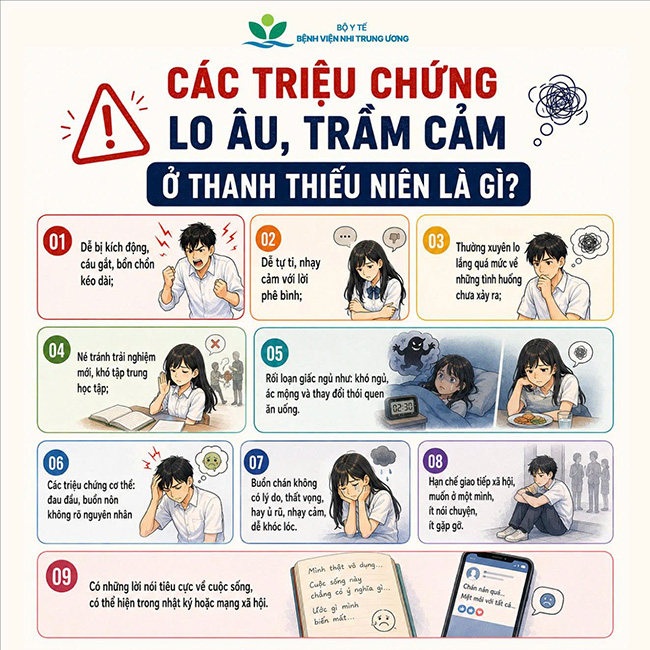
Children may also present with physical symptoms such as palpitations, rapid heartbeat, tremor, sweating, dizziness, shortness of breath, headaches, abdominal pain, or unexplained chest pain.
Anxiety and depression can cause children to withdraw, avoid communication, and disengage from social activities. Conversely, some may become impulsive or seek intense sensations as a coping mechanism for stress.
How parents can support children during exam season
School-age children—especially those in graduating grades and upper secondary school—often face substantial pressure. Parents should understand their child’s capacity and strengths to help set appropriate goals and choose suitable schools and pathways. Equally important is listening to the child’s concerns and aspirations in order to provide emotional support, encouragement, and stress relief during the learning process.
Parents should also ensure:
- adequate nutrition,
- sufficient sleep, and
- regular physical activity,
which can support mental well-being and help children feel more confident in exams.
If a child shows signs of anxiety or depression, the child should be brought to specialized healthcare facilities for timely assessment and intervention.
Digital Information Office – Training and Research Institute for Child Health