From a simple action, when embedded as a cultural practice, hand hygiene has become a strong “shield” that helps protect the lives of pediatric patients at Vietnam National Children’s Hospital. The hospital’s achievements are clearly reflected in impressive indicators: hand hygiene compliance increased from 72% in 2018 to 99.6% in 2024–2025; and the rate of central line–associated bloodstream infections (CLABSI) decreased from 6 cases to fewer than 1 case per 1,000 central line-days.
These are not only technical outcomes, but also evidence of a profound shift in awareness and patient-safety culture—where hand hygiene has become a professional norm, a clinical standard, and a shared responsibility toward patients.
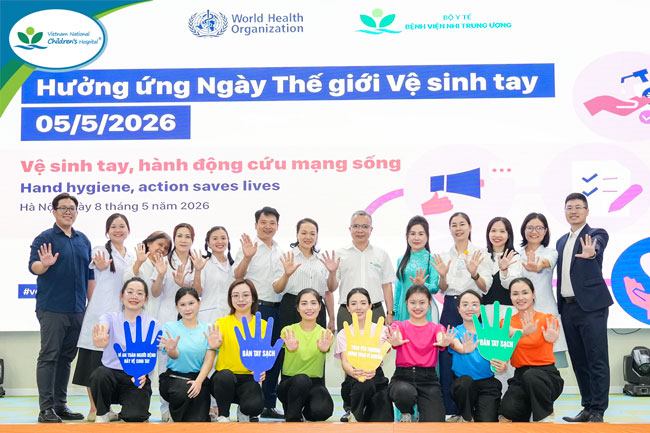
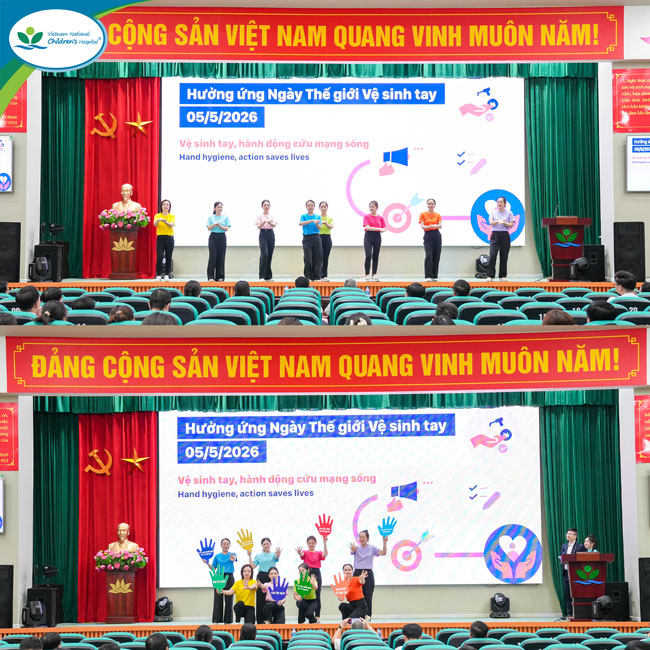
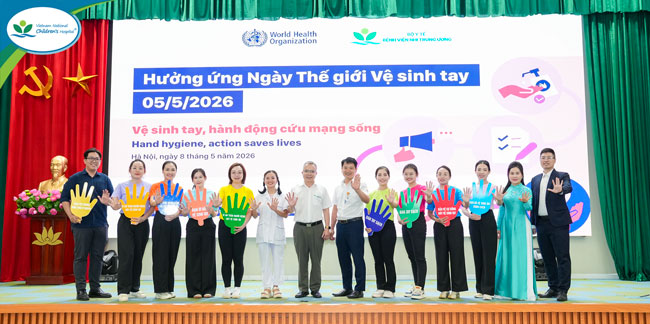
Building on these values, on the afternoon of 08/05/2026, Vietnam National Children’s Hospital successfully organized an event in response to World Hand Hygiene Day, under the theme “Hand hygiene – an action that saves lives”, reinforcing the role of hand hygiene in infection prevention and control (IPC), patient protection, and improved treatment quality.
Infection prevention and control: from procedures to a culture of safety
In his remarks, Dr. Cao Viet Tung, MD, Deputy Director of the Hospital, commended the hospital’s clear progress in infection prevention and control in recent years. He emphasized that IPC is a core foundation for ensuring patient safety in modern medicine, particularly as more advanced and specialized techniques are implemented.

In this context, Vietnam National Children’s Hospital identified five key IPC priorities for 2026:
1. Prioritize patient safety above all; link IPC with improved treatment quality and antimicrobial resistance surveillance.
2. Accelerate digital transformation for surveillance, governance, and risk alerts.
3. Continue modernizing infrastructure and investing in synchronized IPC equipment.
4. Strengthen training, develop a successor workforce, and reinforce discipline in clinical practice.
5. Scale up standardized IPC models to satellite hospitals and the community; promote research and international integration.
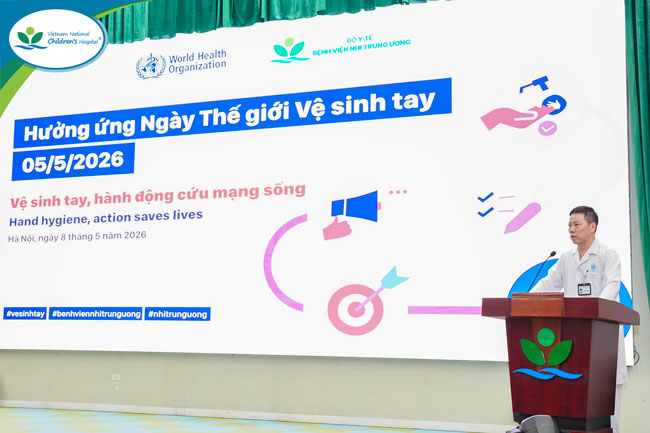
At the launch of the 2026 World Hand Hygiene Day campaign, Dr. Le Kien Ngai, MD, PhD, Head of the Department of Prevention and Infection Control, affirmed that this is not merely an annual activity, but a strong institutional commitment to maintaining hand hygiene as “the breath of life”—a distinctive cultural feature of the Hospital.
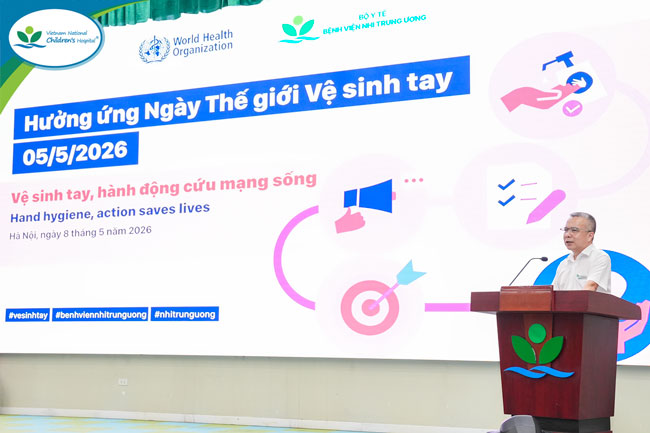
According to Dr. Le Kien Ngai, the most sustainable value lies not in short-term campaigns, but in internalizing hand hygiene as self-driven awareness in every staff member. When hand hygiene becomes an action rooted in understanding and responsibility, it forms the long-term foundation for patient safety.
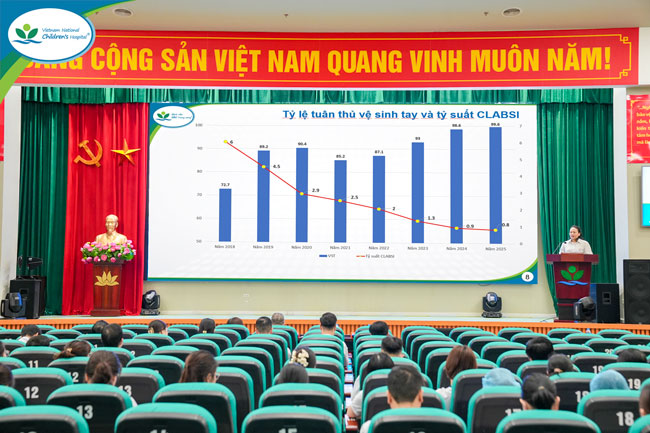
A report by Ms. Truong Thi Kim Duyen, MSc (Head Nurse), Department of Prevention and Infection Control, highlighted that the Hospital’s hand hygiene effectiveness has been achieved through a comprehensive approach that combines communication, training, monitoring, and the promotion of self-discipline—turning hand hygiene into a hospital-wide habit.
Recognizing outstanding units and sustaining long-term impact
A key highlight of the program was the recognition of units with outstanding and breakthrough performance in hand hygiene compliance and healthcare-associated infection prevention during 2022–2025. This served not only as an acknowledgment of sustained efforts but also as a milestone demonstrating the effectiveness of infection control at the Hospital.
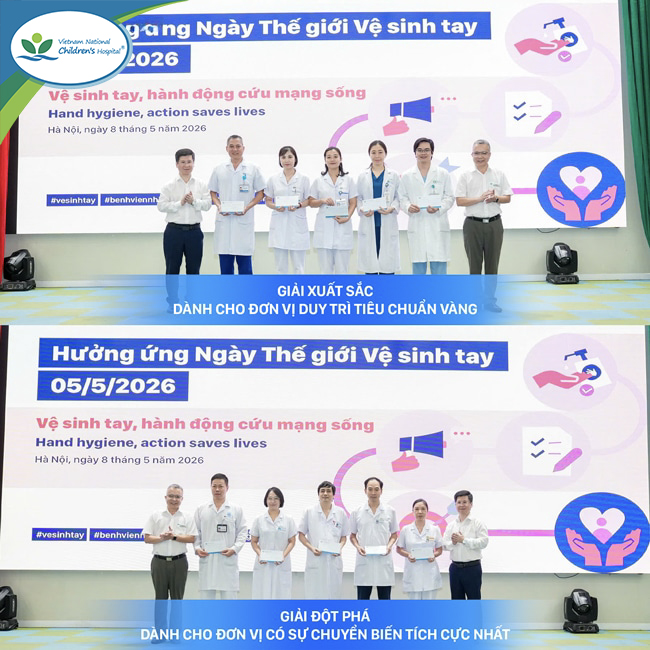
Representing exemplary units, Dr. Dang Anh Duong, MD, PhD, Head of the Surgical Intensive Care Unit, shared practical experience in maintaining hand hygiene compliance in a high-acuity setting—where patients are critically ill, infection risk is high, and even minor lapses can have serious consequences.
Creative communication: turning knowledge into action
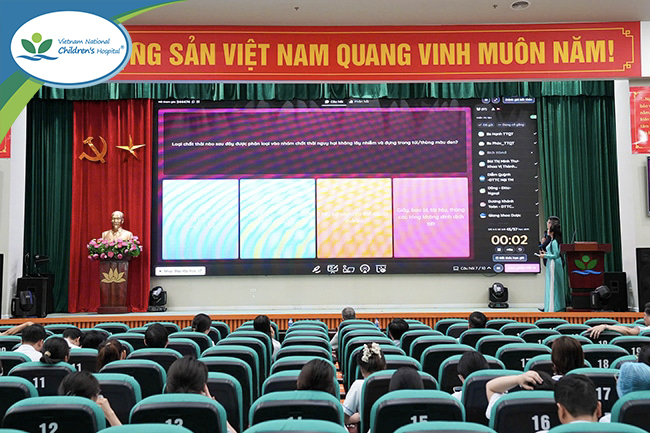
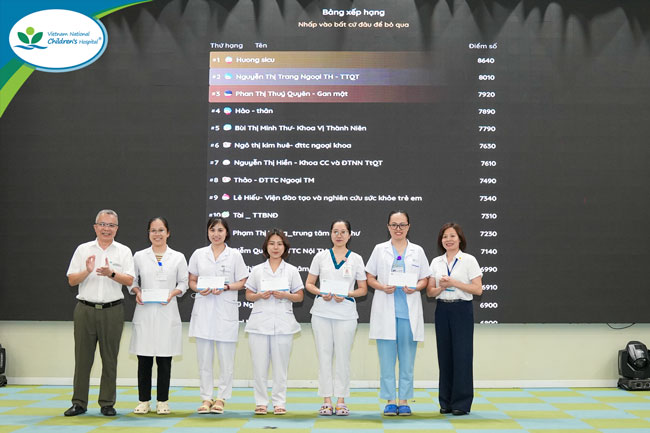
The program atmosphere became even more engaging through an interactive quiz activity featuring 10 IPC-related professional questions. This approachable and lively format helped make technical content easier to remember and apply, strengthening healthcare workers’ motivation to maintain proper hand hygiene practices in their daily work.
With the message “Hand hygiene – an action that saves lives,” Vietnam National Children’s Hospital reaffirmed its sustainable development direction: building a safe healthcare environment and continuously improving treatment quality—where every clinical procedure begins with the highest goal of protecting patients.
Digital Information Office – Training and Research Institute for Child Health