Airway foreign body aspiration is a common and potentially life-threatening accident in young children. However, in many cases, it is overlooked because initial symptoms may be non-specific, leading to serious consequences. Recently, Vietnam National Children’s Hospital received a pediatric patient with a foreign body in the airway for 13 months that had not been detected. In addition, another child aspirated a pistachio, developed acute respiratory distress, and progressed to respiratory failure. These two cases once again highlight the risks of everyday accidents in young children.
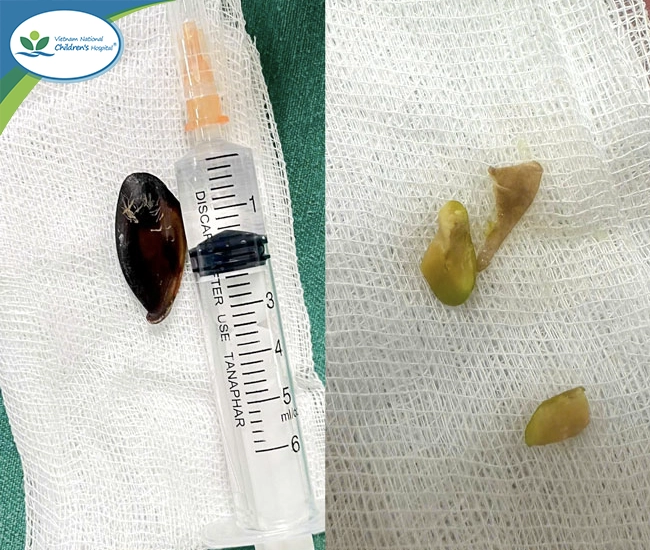
Sapodilla seed aspiration: silent, persistent complications over 13 months
In February 2025, V.H. (14 years old, Hanoi) aspirated a sapodilla seed while eating. The child had a bout of choking cough and chest tightness, but after a few minutes, the coughing stopped. The family, therefore, assumed the seed had passed into the gastrointestinal tract and did not take the child to a medical facility. Over the following 13 months, the child had a persistent dry cough without fever or obvious shortness of breath. The family repeatedly self-medicated without improvement, yet did not consider the possibility that a foreign body remained in the airway.
Recently, when the cough worsened, the child was evaluated at a local hospital and underwent a computed tomography scan, which revealed a foreign body in the right bronchus. The patient was then referred to Vietnam National Children’s Hospital. At The Center for Pulmonology and Respiratory Care, bronchoscopy was indicated to remove a foreign body. However, the procedure was challenging; clinicians had to use rigid bronchoscopy with a laser to remove inflamed and granulation tissue surrounding the foreign body, thereby freeing it and successfully extracting a sapodilla seed measuring approximately 1 × 3 cm.
According to Dr. Nguyen Thi Thu Nga, Specialist II – Deputy Head of the Respiratory Functional Exploration & Outpatient Clinics, The Center for Pulmonology and Respiratory Care, Vietnam National Children’s Hospital: long-standing foreign bodies in the airway may cause inflammation, edema, and tissue formation around the object, making retrieval difficult and posing significant risks to the child’s health and life.

Pistachio aspiration: rapid progression with risk of apnea
Another case involved a 3-year-old girl from Son La, admitted with respiratory failure due to pistachio aspiration. Because the child was eating while crying, a strong inhalation caused the foreign body to enter the airway. After the family provided first aid at home, part of the foreign body was expelled, so the family continued to monitor the child at home. However, the next day the child developed frequent coughing and progressively worsening dyspnea with signs of cyanosis. The child was taken to a local hospital for emergency care and then transferred to the Department of Emergency and Poison Control – Vietnam National Children’s Hospital for further management.
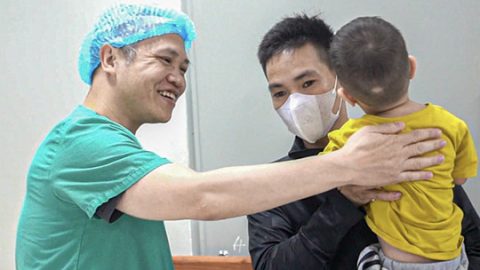
Dr. Bui Vu Anh —Department of Emergency and Poison Control, Vietnam National Children’s Hospital, stated: “Immediately after receiving the patient, clinicians rapidly initiated oxygen therapy and airway control, performed necessary investigations, and held an urgent consultation with The Center for Pulmonology and Respiratory Care for emergency bronchoscopy. After more than two hours from admission, the foreign body was successfully removed.”
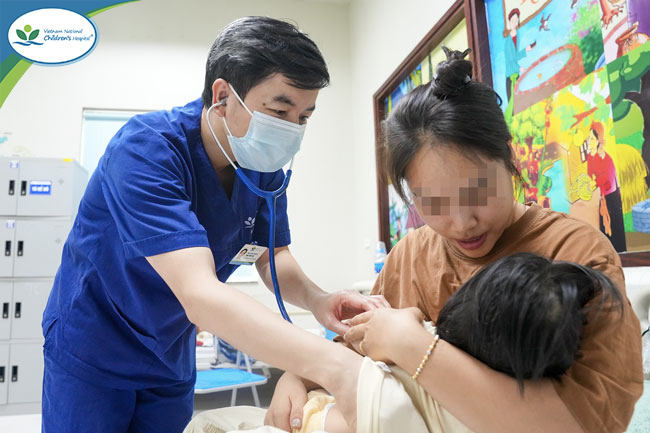
At present, following evaluation, clinicians consider the child to have recovered well without complications, and the child was discharged after three days of treatment.
Warning: Airway foreign bodies can be missed
According to clinicians, airway foreign bodies in children may follow two clinical patterns:
- Acute presentation: airway obstruction and respiratory failure, with potentially rapid life-threatening deterioration.
- Prolonged/insidious presentation: persistent cough only, easily mistaken for common respiratory illnesses.
Notably, after the initial choking episode, a child may have no obvious symptoms of injury even though the foreign body remains in the airway—leading families to underestimate the situation.
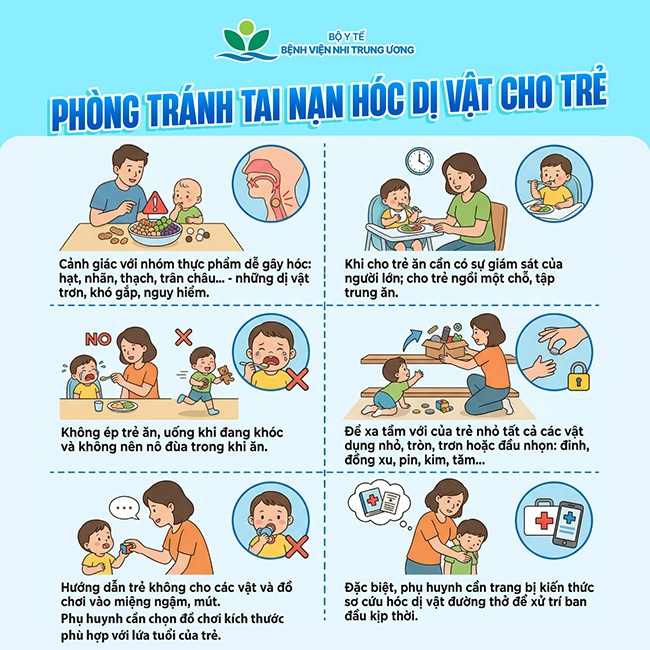
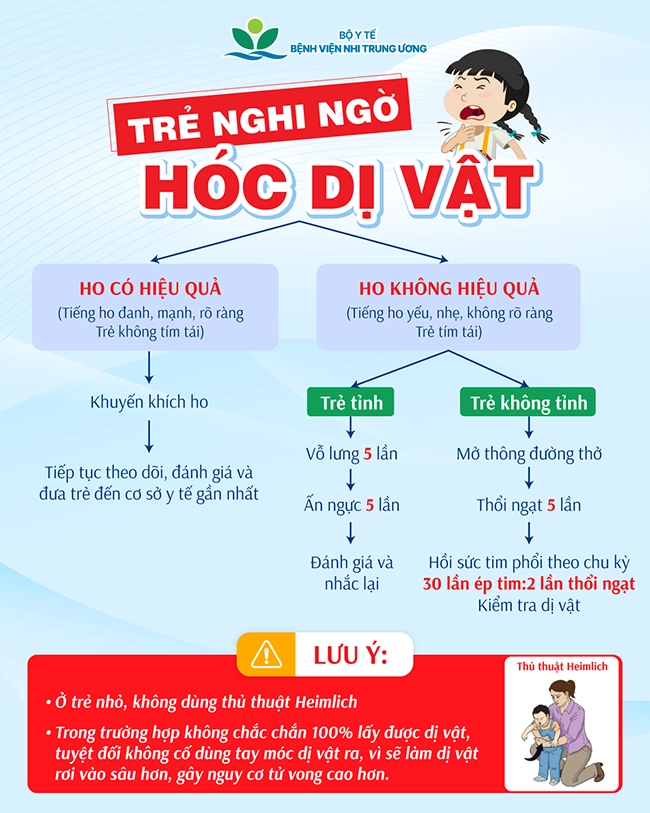
Preventing choking and foreign-body aspiration in children:
Dr. Nguyen Thi Thu Nga, Specialist II – Deputy Head, Respiratory Functional Exploration & Outpatient Clinics, The Center for Pulmonology and Respiratory Care
Dr. Bui Vu Anh, MSc – Department of Emergency and Poison Control
Digital Information Office – Training and Research Institute for Child Health