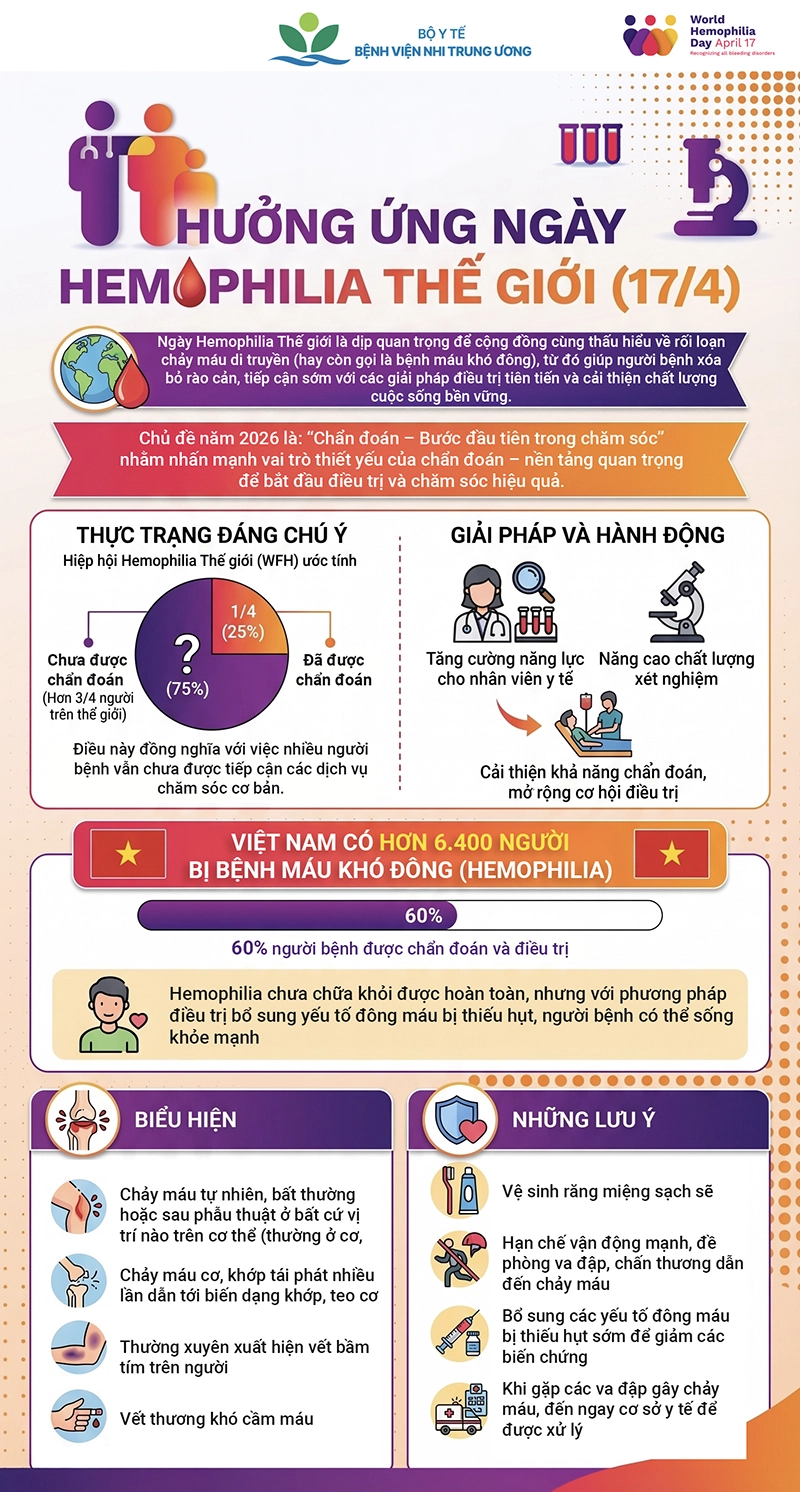
Every year on 17 April, the World Federation of Hemophilia (WFH) marks World Hemophilia Day. This is an important occasion to raise public understanding of inherited bleeding disorders (commonly known in Viet Nam as “hemophilia”), helping people living with the condition overcome barriers, access timely modern treatment, and achieve a better, more sustainable quality of life.
The theme for 2026 is: “Diagnosis – The First Step in Care”, emphasizing that diagnosis is the essential foundation for effective treatment and long-term care.
In Viet Nam, an estimated 6,400 people are living with hemophilia, yet only around 60% have been diagnosed and have regular access to treatment. This means many patients may miss the “golden window” for timely intervention. With advances in modern medicine, early diagnosis and appropriate treatment can enable patients to control the condition and live healthy lives.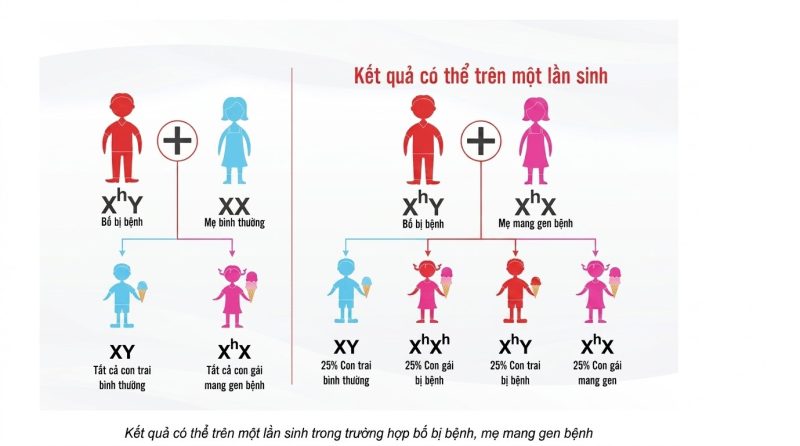
What is hemophilia?
Hemophilia is an X-linked inherited bleeding disorder caused by deficiency of:
- Factor VIII (Hemophilia A), or
- Factor IX (Hemophilia B)
These deficiencies impair blood clotting, leading to prolonged bleeding. The estimated prevalence is approximately 20 per 100,000 males, and 80–85% of cases are Hemophilia A.
Common signs and symptoms
Hemophilia can present in various ways, such as:
- Spontaneous or unusual bleeding, or prolonged bleeding after surgery, at any site (often muscles and joints)
- Recurrent bleeding into muscles and joints, which may lead to joint deformity and muscle wasting
- Frequent bruising
- Wounds that are difficult to stop bleeding
There are currently 7 main healthcare facilities nationwide that provide treatment and ongoing management for hemophilia. Vietnam National Children’s Hospital is one of the leading centers for diagnosis, treatment, and long-term management of hemophilia in children.
If a child shows any of the signs above, families should bring the child to the Department of Hematology – Vietnam National Children’s Hospital for timely examination and consultation.
Also watch for other bleeding/clotting disorders
|
Some other bleeding disorders also require early detection. Parents should consider bringing a child to Vietnam National Children’s Hospital or another specialized facility if the child has any 3 signs, or 1–2 signs that recur, including:
For situations requiring medical consultation—or more severe symptoms needing interventions such as medication or blood products—parents should seek timely care and follow the recommended treatment plan. |
Digital Information Office – Training and Research Institute for Child Health