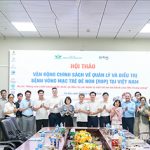
On the afternoon of 11 September 2026, Viet Nam National Children’s Hospital (VNCH) organized the seminar “Policy Advocacy for the Management and Treatment of Retinopathy of Prematurity (ROP) in Viet Nam.” The seminar was held within the framework of the project “Improving the Quality of Diagnosis and Treatment of Pediatric Eye Diseases at Viet Nam National Children’s Hospital” funded by Orbis (USA).
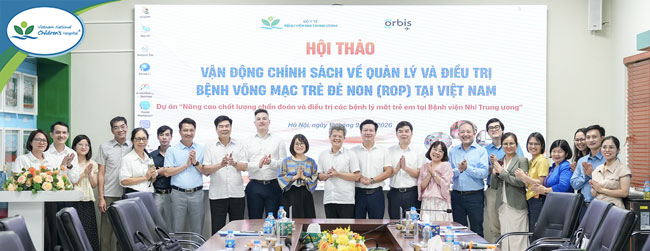
The seminar brought together representatives from the Administration of Maternal and Children’s Affairs and the Medical Service Administration under the Ministry of Health; UNICEF Viet Nam; Orbis Viet Nam; as well as leaders and experts from eye hospitals, pediatric hospitals, obstetrics and pediatrics hospitals, and general hospitals across the country.
The seminar focused on sharing national and international experience in the management of retinopathy of prematurity; discussing existing gaps and needs in ROP screening, early detection, diagnosis, treatment, and follow-up in Viet Nam; and proposing solutions and policies to improve the effectiveness of ROP management and treatment.
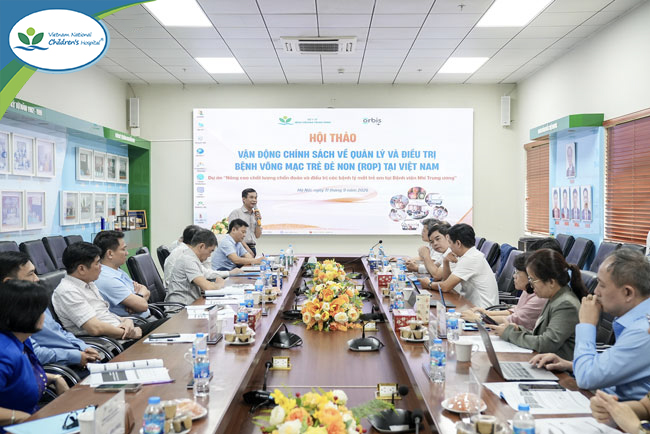
Dr. Tran Dang Khoa, MD, PhD – Deputy Director of the Administration of Maternal and Children’s Affairs, Ministry of Health, chaired the seminar and discussed key issues in ROP management and treatment in Viet Nam with participants.
Retinopathy of Prematurity (ROP) is an important cause of preventable childhood blindness. With advances in neonatal intensive care and neonatal care, an increasing number of preterm infants, particularly extremely preterm infants, are surviving. However, the number of infants at risk of developing ROP is also increasing. Without timely screening, follow-up, and treatment, ROP can progress to retinal detachment and permanent blindness, severely affecting children’s quality of life and creating a long-term burden for their families and society.
In Viet Nam, significant progress has been made in the care of preterm infants; however, access to ROP screening, follow-up, and treatment remains uneven across localities and levels of the healthcare system. Shortages of specially trained healthcare professionals, limited equipment, geographical barriers, and an insufficiently coordinated referral network all affect children’s access to services. Meanwhile, ROP requires strict adherence to screening and follow-up schedules. Delays may result in missing the critical window for treatment and lead to irreversible vision loss.
For more than 20 years, Viet Nam National Children’s Hospital has been one of the pioneering institutions in ROP screening and treatment in Viet Nam, under the professional guidance of Dr. Nguyen Xuan Tinh, MD, PhD – Director of Hanoi Eye Hospital, with support from national and international experts, particularly Orbis. Thousands of at-risk infants have been screened, diagnosed, and treated, contributing to the prevention of blindness and preservation of vision among preterm infants.
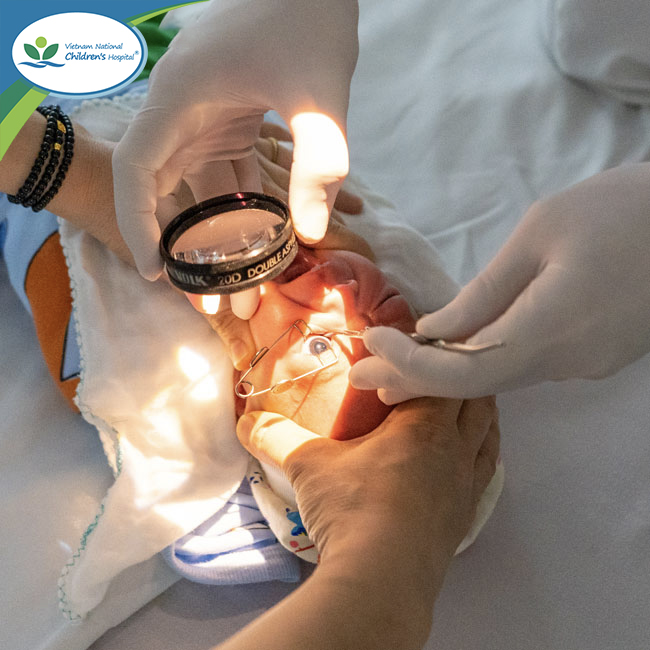
ROP screening for preterm infants at Viet Nam National Children’s Hospital.
In his opening remarks, Prof. Tran Minh Dien, MD, PhD – Director of Viet Nam National Children’s Hospital, noted that advances in neonatal intensive care have enabled an increasing number of extremely preterm and extremely low-birth-weight infants to survive. However, the responsibility of healthcare providers extends beyond saving lives to ensuring the best possible quality of life for these children. According to Prof. Tran Minh Dien, ROP is one of the challenges requiring particular attention. Without timely screening and treatment, affected children are at risk of severe visual impairment or blindness. ROP management should therefore ensure a continuum of care from screening and diagnosis to treatment and post-discharge follow-up, with close coordination across specialties and different levels of the healthcare system.

Prof. Tran Minh Dien emphasized three key priorities in ROP management: ensuring timely screening for at-risk infants; improving access to treatment; and establishing an integrated management system covering screening, diagnosis, treatment, and post-discharge follow-up.
At the seminar, participants heard a series of presentations focusing on the current burden of ROP, treatment needs, and solutions to improve ROP management in Viet Nam.
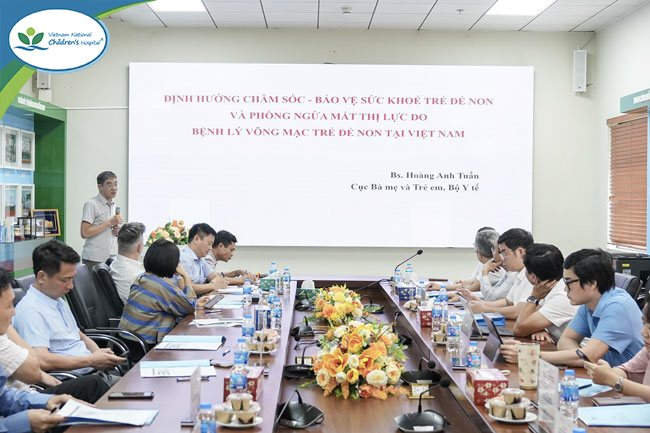
Dr. Hoang Anh Tuan – Officer of the Administration of Maternal and Children’s Affairs, Ministry of Health, presented “Directions for the Care and Protection of Preterm Infants and the Prevention of Vision Loss due to ROP in Viet Nam.”
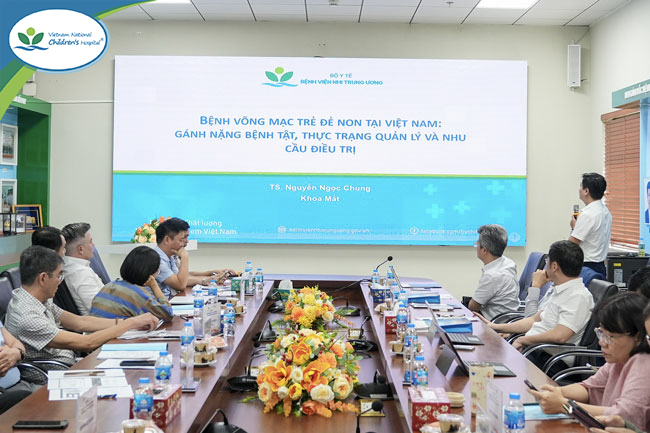
Dr. Nguyen Ngoc Chung, MD, PhD – Head of the Ophthalmology Department, Viet Nam National Children’s Hospital, presented “Retinopathy of Prematurity in Viet Nam: Disease Burden, Current Management and Treatment Needs.”
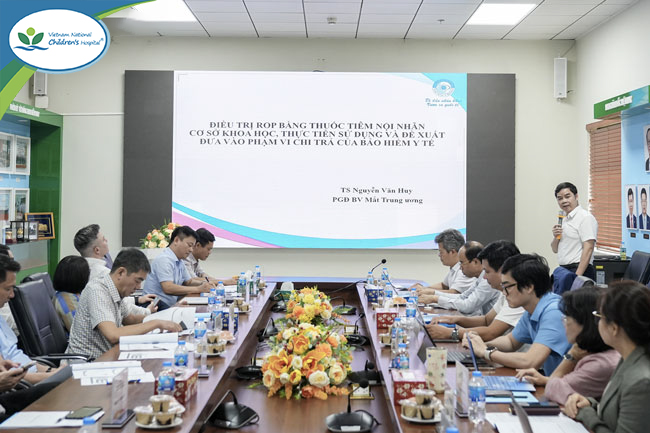
Dr. Nguyen Van Huy, MD, PhD – Vice Director of Vietnam National Institute of Ophthalmology, presented “Treatment of ROP with Intravitreal Therapy: Scientific Evidence, Clinical Practice and Proposal for Health Insurance Coverage.”
In addition to clinical and policy-related topics, Assoc. Prof. Daniel E. Maidana, MD, PhD – University of Illinois Chicago and Orbis international expert shared international experience in ROP management and treatment, including healthcare financing and reimbursement mechanisms. He also presented the application of artificial intelligence (AI) in ROP screening and early diagnosis, as well as the requirements for its implementation in Viet Nam. These perspectives provided valuable international experience and practical insights to support further improvement of the ROP management system in Viet Nam.
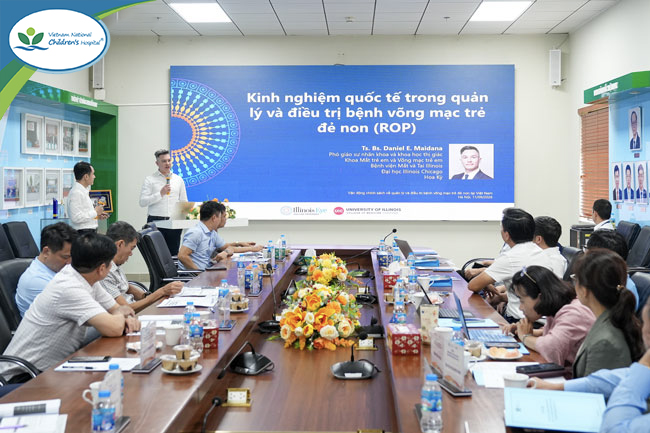
Assoc. Prof. Daniel E. Maidana, MD, PhD – University of Illinois Chicago and Orbis International expert – shared experience in ROP management, treatment, and the application of AI in ROP screening.
During the seminar, participants also discussed ROP treatment approaches, including a proposal to include intravitreal medicines under health insurance coverage. Discussions also addressed the application of AI, clinical protocols, referral networks, and measures to strengthen professional capacity.

Mr. Nguyen Duc Thang – Officer of the Medical Service Administration, Ministry of Health, shared his perspectives at the seminar.

Assoc. Prof. Pham Ngoc Dong, MD, PhD – Director of Vietnam National Institute of Ophthalmology, chaired a discussion session and shared his perspectives at the seminar.

Participants discussed key issues at the seminar.
Based on the presentations and discussions, further development and refinement of relevant policies are expected to improve treatment effectiveness, promote equitable access to healthcare services, and reduce the long-term burden of blindness and associated social costs. The ultimate goal is to ensure that every preterm infant at risk of ROP receives timely screening, appropriate follow-up, and prompt and appropriate treatment, so that a family’s ability to pay does not become a barrier to protecting a child’s vision.