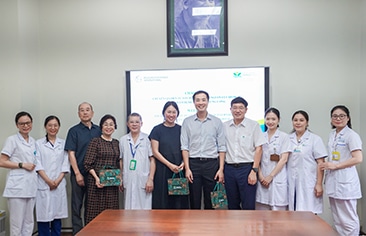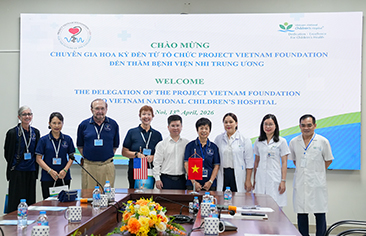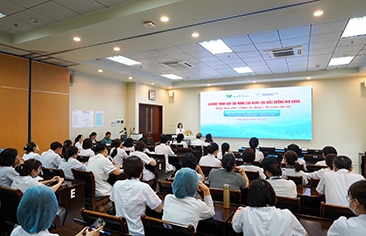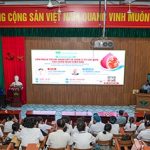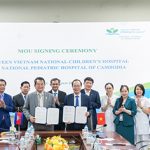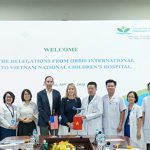
On 30 July 2026, Vietnam National Children’s Hospital (VNCH) held a meeting with Orbis International (USA) to review the progress and achievements of the Retinopathy of Prematurity (ROP) Project and discuss future directions for collaboration aimed at further improving the quality of pediatric eye care in Vietnam.
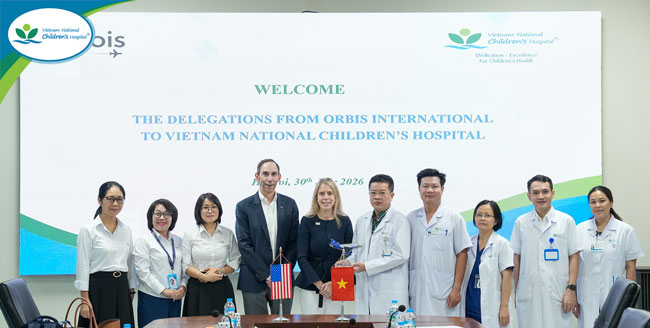
Vietnam National Children’s Hospital and Orbis International discussed future directions for collaboration in pediatric eye care.
For more than 20 years, Orbis has partnered with Vietnam National Children’s Hospital in strengthening pediatric eye care and preventing childhood blindness in Vietnam. One of the key milestones of this long-standing partnership is the Retinopathy of Prematurity (ROP) Project, funded through a non-refundable grant from Orbis and approved by the Ministry of Health of Vietnam. The project aims to strengthen capacity for the prevention, screening, diagnosis, treatment, and follow-up of ROP – one of the leading causes of preventable childhood blindness.
Speaking at the meeting, Assoc. Prof. Pham Duy Hien, MD, PhD – Vice Director of Vietnam National Children’s Hospital, stated that VNCH receives approximately 5,000 patient visits for examination and treatment each day. The Ophthalmology Department is one of the Hospital’s key specialized departments, responsible for the examination and treatment of eye diseases in children. However, the Department continues to face significant challenges, particularly shortages of human resources and specialized equipment for neonatal patients.

Assoc. Prof. Pham Duy Hien expressed his sincere appreciation for the practical and meaningful support that Orbis has provided to the Hospital.
Through the Retinopathy of Prematurity (ROP) Project, Orbis has supported training and capacity building for VNCH healthcare professionals while providing modern equipment for ophthalmic examination, screening, and treatment. Currently, the Ophthalmology Department of Vietnam National Children’s Hospital provides ROP screening for approximately 3,000–5,000 pediatric patients each year and treatment for 150–200 cases annually, making it one of the ROP screening and treatment centers with the highest patient volumes in Southeast Asia.
However, pediatric eye care in Vietnam continues to face considerable challenges. At the provincial level, there remain shortages of trained human resources and equipment for ROP screening and treatment; public awareness of the disease remains limited; and advanced treatment methods have not yet been widely implemented.
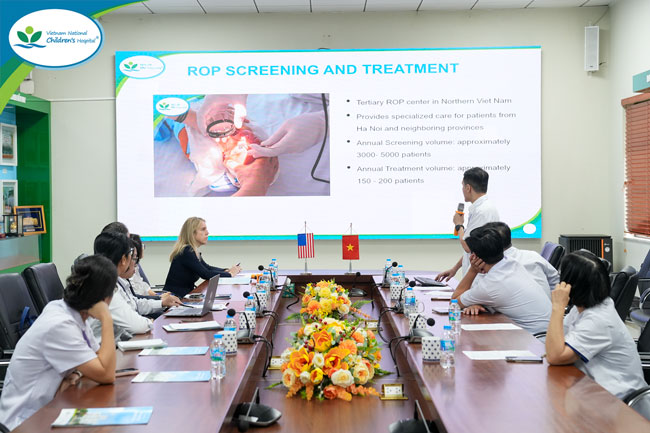
Nguyen Ba Trung, MD, MSc, presented an overview of collaborative activities between Vietnam National Children’s Hospital and Orbis International.
Representing Orbis International, Ms. Kathleen Ann Sherwin – President and CEO of Orbis International, highly appreciated the achievements of the collaboration between the two institutions and reaffirmed Orbis’ commitment to continuing its partnership with Vietnam National Children’s Hospital to develop support programmes tailored to the practical needs of pediatric eye care in Vietnam.
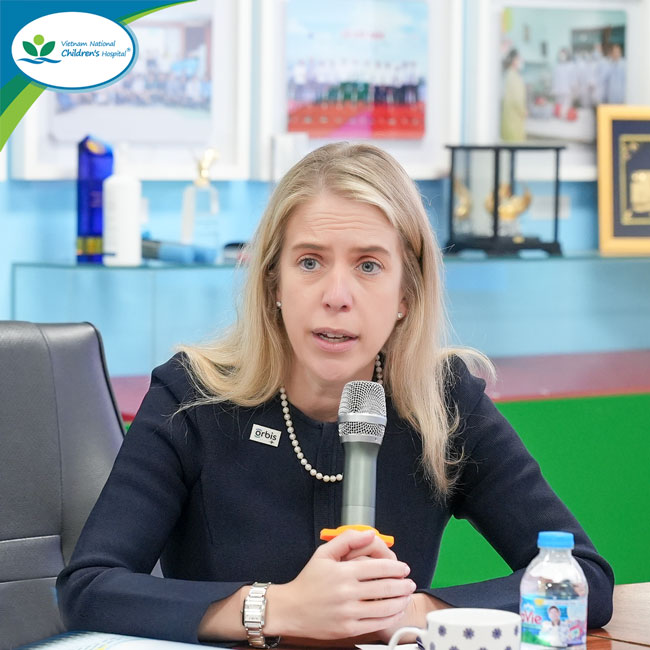
Ms. Kathleen Ann Sherwin delivered remarks at the meeting.
During the meeting, the two sides agreed on several important directions for future collaboration. In particular, Orbis will continue to support Vietnam National Children’s Hospital in developing into a leading ROP referral and training center in Northern Vietnam.
The two institutions will strengthen professional support and equipment provision for provincial healthcare facilities; continue specialized training programmes and collaborate with neonatal care units to optimize oxygen management for infants and minimize the risk of ROP; promote scientific research; advocate for ROP treatment to be covered by National Health Insurance; explore the application of artificial intelligence (AI) in ROP screening and diagnosis; promote the approval and implementation of new treatment options; and strengthen health education and communication activities to raise parental awareness.
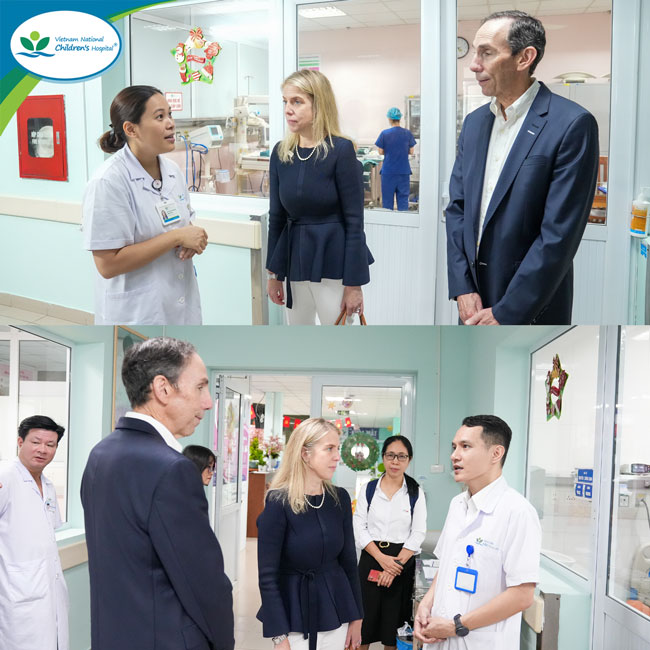
The Orbis delegation visited the Neonatal Care Center and the Ophthalmology Department of Vietnam National Children’s Hospital to observe clinical examination and treatment activities.
At the conclusion of the meeting, both sides reaffirmed their commitment to developing a concrete action plan to translate the agreed objectives into practice, contributing to improving the quality of pediatric eye care, reducing the risk of blindness among premature infants, and expanding access to high-quality ophthalmic services for children across Vietnam.