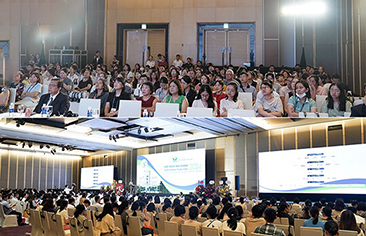
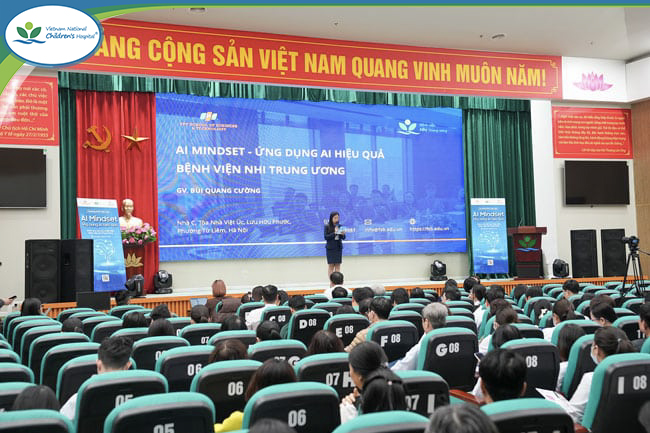
On the afternoon of December 5, 2025, Vietnam National Children’s Hospital (VNCH), in collaboration with the FSB Institute of Management & Technology – FPT University, organized a specialized training program entitled “AI Mindset – Effective Application of Artificial Intelligence (AI) for Staff and Employees.”
The training was attended by members of the Board of Directors of Vietnam National Children’s Hospital; Ms. Luong Thi Hong Anh – Director of the Corporate Training & Consulting Center, FSB Institute of Management & Technology – FPT University; leaders of departments, divisions, and centers of the hospital; and more than 300 key staff members, civil servants, and employees from functional departments who actively participated in the program.
The program was organized to implement the spirit of Resolution No. 57-NQ/TW dated December 22, 2024, of the Politburo on breakthroughs in the development of science, technology, innovation, and national digital transformation.
The training was conducted in a face-to-face format, with instruction delivered by Mr. Bui Quang Cuong – Director of iVIET Enterprise Development Solutions Company, lecturer at FPT University, and instructor of the Vietnam Digital 4.0 program implemented by Google.
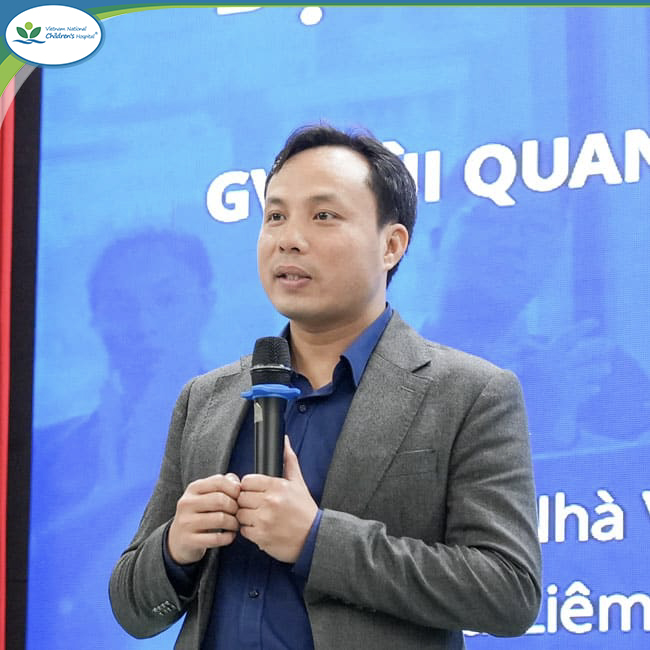
Mr. Bui Quang Cuong expressed his pleasure in sharing insights on AI and the four levels of AI application with the Vietnam National Children’s Hospital.
The training content centered on practical application topics, including:
- The AI landscape and its applications in administrative and professional work;
- Common pitfalls when using AI in medical diagnosis and scientific research;
- Data security and information protection issues related to AI application;
- Critical thinking in the use of AI;
- Trends in information technology integration in hospital operations.
Speaking at the training session, Professor Tran Minh Dien, MD, PhD – Director of Vietnam National Children’s Hospital, emphasized that the global and national healthcare sector is entering a period of profound transformation. Artificial intelligence is no longer a future trend but an essential tool of the present. As the highest-level pediatric referral hospital, Vietnam National Children’s Hospital must seize this opportunity to improve the quality of medical care, enhance patient safety, optimize hospital operations, and promote scientific and technological development.
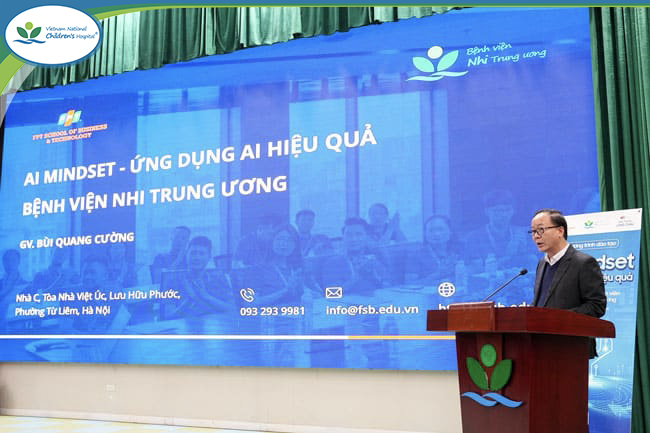
Professor Tran Minh Dien encouraged staff to seriously engage in learning and to develop an AI application mindset—using AI correctly, effectively, and safely in daily work—thereby contributing to the hospital’s digital transformation.
Four levels of AI application in hospitals
In his thematic presentation, Mr. Bui Quang Cuong provided an overview of the potential applications of AI in modern healthcare. He noted that while technology cannot replace human emotions and empathy, it can serve as a powerful support tool, allowing physicians to devote more time and attention to patients.
The speaker highlighted four levels of AI application in hospitals, including:
- Individual level: Supporting drafting, summarizing, reading comprehension, rapid data analysis, and time-saving tasks.
- Department/Unit level: Acting as a professional assistant based on clean and reliable data sources, such as treatment guidelines and official documents from the Ministry of Health and the World Health Organization (WHO).
- Inter-departmental level: Developing into proactive digital agents within processes such as automated appointment reminders, patient guidance, and administrative support.
- Smart hospital level: Integrating the entire system to optimize patient flow, reduce waiting times, and improve service quality.
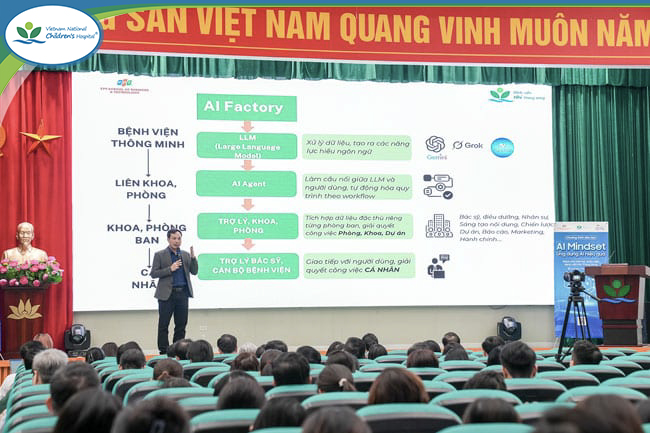
Four levels of AI application in hospitals: individual; department/unit; inter-departmental; and smart hospital.

Participants also engaged in hands-on practice, directly using AI applications on mobile devices.
A highlight of the training was the practical session, which introduced several AI tools that support daily work, such as automatic meeting minute generation, rapid translation, and automated video creation. Alongside the benefits, the speaker emphasized the critical importance of information security and data privacy when applying AI in healthcare settings.

The practical AI exercises were highly applicable, enabling hospital staff to easily apply them in daily work.
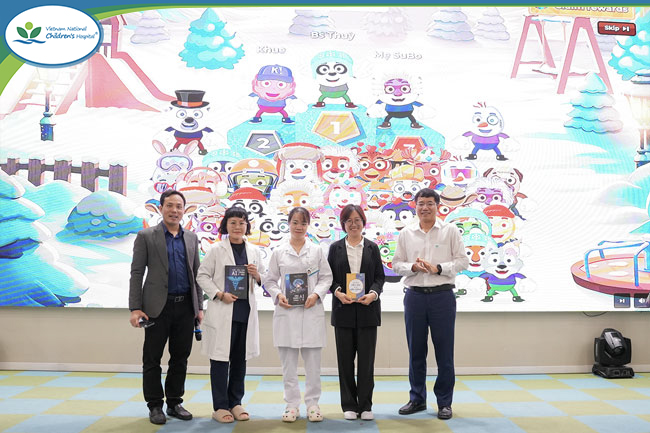
Interactive games related to AI created an engaging and lively learning atmosphere for participants.
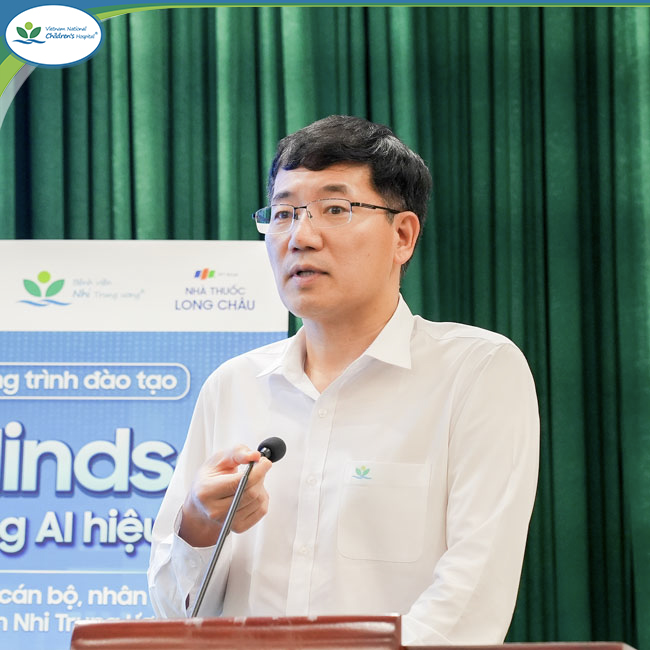
Speaking at the session, Dr. Phan Huu Phuc, MD, PhD – Deputy Director of Vietnam National Children’s Hospital, encouraged staff to apply AI flexibly and effectively in their work, while cautioning against overreliance on AI and emphasizing the need to pay special attention to the security of medical information.
At the conclusion of the training, many staff members highly appreciated the program’s practicality and effectiveness and expressed confidence in applying AI to their daily work. In the coming period, Vietnam National Children’s Hospital will continue to implement advanced AI training courses to strengthen its digital transformation capacity in healthcare and improve the quality of medical services, better meeting the healthcare needs of children nationwide.