M.L, an 18-month-old Australian girl who had been completely dependent on a feeding tube for the past 14 months due to severe anorexia, can now eat orally again. Currently, she is gradually catching up with the developmental milestones of her peers. This progress is thanks to the determination and perseverance of the Nutrition Department doctors at the Vietnam National Children’s Hospital, along with the dedicated support of her family.
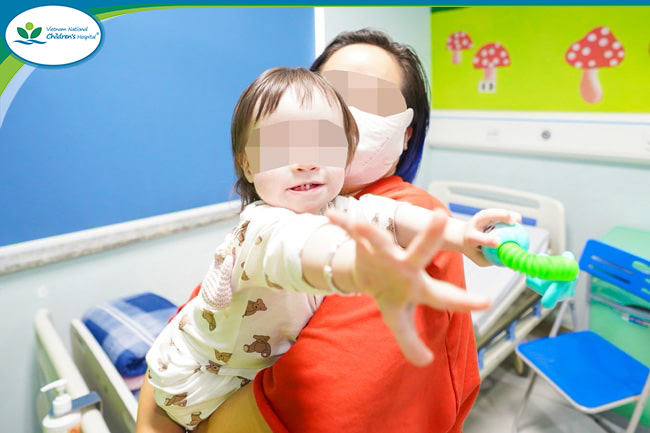
M.L (with an Australian father and Vietnamese mother) brought to Vietnam for evaluation and treatment of anorexia
Premature birth and 14 months dependent on a feeding tube
According to her mother, M.L was born prematurely, so her parents were always particularly attentive to her nutrition and development. At birth, she fed normally from a bottle. However, around four months of age, she began eating less and occasionally refused to eat for several days. In Australia, to ensure adequate nutrition, doctors decided to place a nasogastric tube from the nose to the stomach for feeding. Despite her family’s efforts to encourage oral feeding, M.L consistently pushed food away or vomited, barely accepting any intake.
Following recommendations from friends, the family decided to bring her to the Nutrition Department at Vietnam National Children’s Hospital, hoping to identify the underlying cause of her anorexia and enable her to eat orally like other children.
A special case for the Nutrition Department team
According to Dr. Nguyễn Thị Thúy Hồng, Deputy Head of the Nutrition Department at Vietnam National Children’s Hospital, this case is exceptional both in terms of circumstances and disease progression: “From distant Australia, the family brought M.L to Vietnam for treatment. Upon admission, she was 18 months old but weighed only 7.9 kg and measured 73.5 cm in height, corresponding to moderate malnutrition according to World Health Organization (WHO) growth standards. In addition, she showed signs of delayed motor development and was still fully dependent on a feeding tube. We assessed that her prolonged anorexia led to nutritional deficiencies, impaired physical development, and the loss of natural eating and swallowing reflexes.”
After taking a detailed medical history, doctors determined that M.L’s anorexia began at four months, coinciding with a developmental milestone — the start of rolling over. At this stage, her attention and appetite may temporarily decrease. However, early and prolonged intervention with tube feeding inadvertently caused her to lose oral sensation and feeding skills.
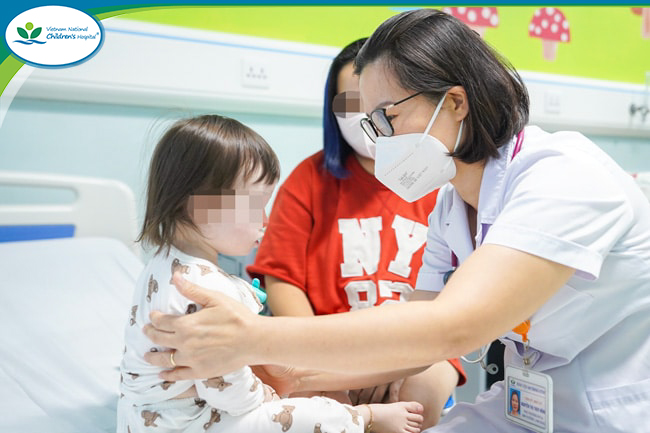
Dr. Nguyễn Thị Thúy Hồng, Deputy Head of the Nutrition Department at Vietnam National Children’s Hospital, examines the patient
Decision to remove the feeding tube and reintroduce oral feeding
After a multidisciplinary consultation and ruling out any underlying physical conditions, doctors decided to remove the feeding tube and begin the process of reintroducing oral feeding. This was a challenging decision, as the parents were concerned that eating too little could lead to low blood sugar, weight loss, and worsening malnutrition. However, after doctors explained the close monitoring system in place in the ward and the importance of restoring the child’s natural eating reflex, the family committed to supporting the process alongside the medical team.
The family was guided to reintroduce foods gradually, starting with milk and yogurt, followed by thin porridge — foods with mild flavors that are easy to accept and swallow. Each day, the child’s intake and reactions were recorded to adjust portion sizes appropriately.
Joyful breakthrough after four days of treatment
The good news came sooner than expected. On the very first day after the tube was removed, M.L was able to drink 30 ml of milk. In the following days, she progressed to eating around 80 ml of porridge without being forced, showing no signs of food refusal, fussiness, or spitting out food.
“That was an emotional moment. From being fed only through a tube, M.L can now swallow and cooperate during meals. For us, it is a very precious sign of recovery,” shared Dr. Nguyễn Thị Thúy Hồng.
Currently, the child’s condition has improved significantly. She has completely stopped using the feeding tube and was discharged from the hospital. Reflecting on the long journey, her mother emotionally shared: “Seeing my child happily eat each spoonful of porridge feels like waking from a dream. Although she still needs time to adjust to daily nutrition, seeing her eat like other children makes me very happy. Our family is deeply grateful to the doctors at the Nutrition Department, Vietnam National Children’s Hospital, for accompanying our child throughout this journey.”
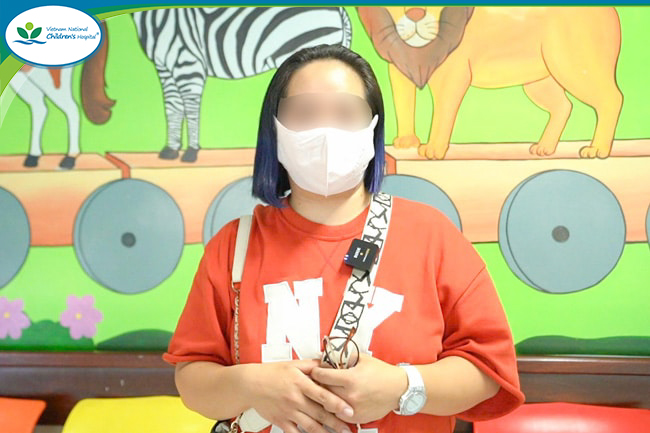
The child’s mother happily recounts the days of re-learning to eat
From a real case to a message: Don’t let physiological picky eating become pathological anorexia
Anorexia in children can have multiple causes: physiological, medical, habitual, or psychological. If parents are overly anxious, force the child to eat, or intervene too early with a feeding tube or intravenous nutrition when not necessary, the child risks losing oral sensation, reduced swallowing reflex, and developing true anorexia. Parents need to be patient, accompany their child through the process, and seek care at specialized nutrition centers for proper assessment, guidance, and treatment.
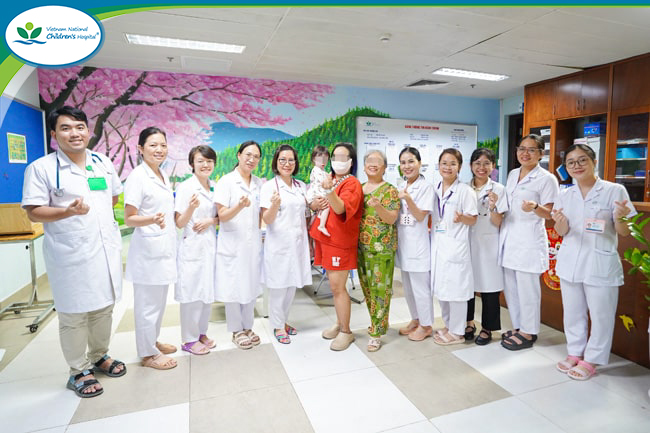
The child’s family and the Nutrition Department doctors take a commemorative photo on the day of discharge
M.L’s case is not only a professional success but also a testament to the power of faith, perseverance, and collaboration among doctors, family, and patient. Witnessing the child happily eating again brings joy not only to her parents but also to the entire medical team at Vietnam National Children’s Hospital — those who work tirelessly every day to help children grow up healthy and whole.